Last updated October 15, 2026
ADU Cost Breakdown: The Ventura Homeowner’s Reference for 2026
Here’s the number most Ventura homeowners never see coming: the fees you pay before a single 2×4 arrives can reach $55,000. Not lumber, not labor, not finishes. Just the right to build. Ventura’s coastal permitting layer, utility connection requirements, and school impact fees create a pre-construction cost stack that routinely surprises people who priced their ADU using a statewide average calculator. By the time you add Ventura Water & Sanitation connection charges, plan check hours, and city impact fees, you’re often $30,000 to $55,000 deep before construction begins. Our complete guide to ADU in Ventura breaks down where every dollar actually goes in a Ventura ADU project for 2026, so you can evaluate contractor bids with confidence instead of hope.
Quick Answer
A detached ADU in Ventura in 2026 typically costs $180,000 to $320,000 for a 400-700 square foot unit, before site work and utility connections. Garage conversions run $90,000 to $160,000, attached ADUs fall between $140,000 and $260,000, and Junior ADUs (JADUs) inside your existing home cost $45,000 to $90,000. The Ventura-specific premium comes from high local labor rates, coastal-zone engineering requirements, and city fees that can add 20-35% above Central Valley benchmarks.
Table of Contents
- 2026 Cost Ranges by ADU Type in Ventura
- The Pre-Construction Cost Stack: Every Fee Before You Build
- Legitimate Cost Variation vs. Inflated Bids
- Fixed-Price Contracts and the Allowance Trap
- How Ventura Homeowners Are Financing ADUs in 2026
- Realistic Timeline: From First Call to Certificate of Occupancy
- Permits, Inspections, and Coastal Zone Considerations
- Common Mistakes to Avoid
2026 Cost Ranges by ADU Type in Ventura
Before you compare bids, you need to know what “reasonable” looks like for your specific project type. We’ve broken down Ventura pricing into low, mid, and high tiers because the range within each category is wide enough to hide a bad bid or a great one. These numbers reflect what we’re seeing across Ventura neighborhoods in early 2026, from Midtown to East Ventura to the Avenue.
Detached New Construction ADU
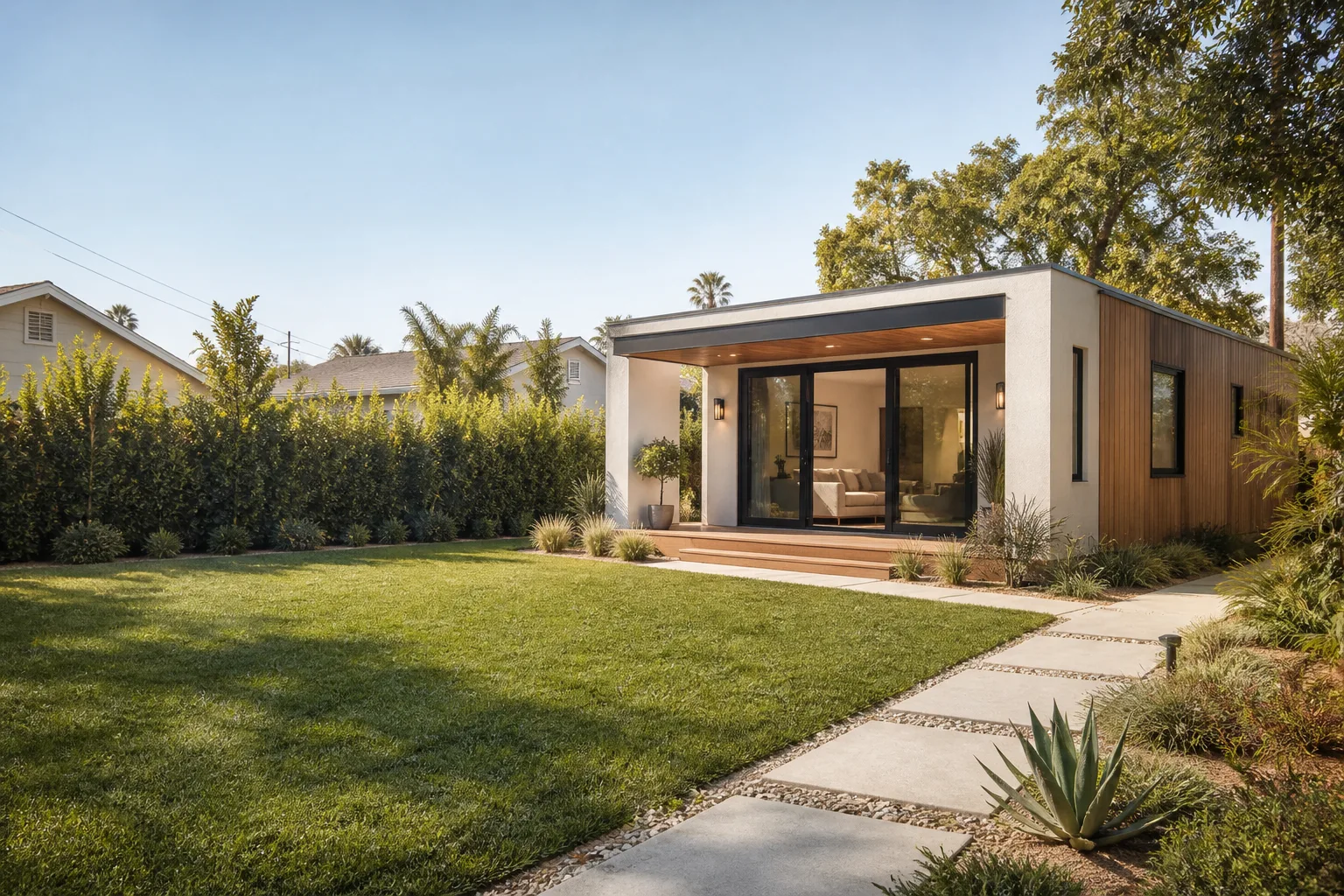
This is the most expensive option and the most popular for good reason: full separation from the main house, no shared walls, and maximum rental privacy. In Ventura, a detached unit of 400 to 700 square feet runs $180,000 to $320,000 before site work. The low end assumes a simple rectangular footprint, standard finishes, and favorable soil. The high end reflects custom design, coastal bluff engineering, or premium interior selections. Site work adds another $15,000 to $45,000 depending on grading, retaining walls, and utility trenching distances.
Prefab and panelized construction can shift these numbers. Brands like Dvele and Plant Prefab produce factory-built modules that reduce on-site framing time by weeks, though crane access and foundation precision requirements can offset some savings. In our experience building both stick-framed and factory-built ADUs in Ventura, the total project cost difference is often smaller than the time savings, which matters when you’re paying carrying costs on a construction loan.
Attached ADU (Addition)
An attached ADU shares one wall with your main house and typically costs $140,000 to $260,000 for 400 to 600 square feet. You save on foundation work compared to a detached unit, but you pay for structural tie-ins, fire-rated wall assemblies, and sometimes a panel upgrade if your existing electrical service can’t handle the added load. Ventura’s older housing stock, especially in neighborhoods with 1950s and 1960s construction, frequently requires a 200-amp service upgrade, which runs $3,500 to $6,000 on its own.
Garage Conversion
Converting an existing attached or detached garage is the fastest path to a rentable unit and the most budget-friendly at $90,000 to $160,000. The structure already exists, which eliminates foundation and framing costs. But conversions come with their own challenges: raising the slab to match interior floor height, insulating walls that were never meant to be conditioned space, and replacing the garage door with a properly weather-sealed wall and entry door. Ventura garages built before 1980 often lack a proper vapor barrier, and retrofitting one adds $4,000 to $9,000.
We’ve also converted Boxabl structures and Mighty Buildings panels on Ventura lots where a traditional ADU footprint was impractical, though these units are usually classified as detached ADUs rather than conversions when placed on a new foundation.
Junior ADU (JADU)
JADUs convert existing space inside your home, usually a bedroom with a separate entrance, into a self-contained unit with its own kitchenette. At $45,000 to $90,000, this is the most affordable ADU type and carries drastically reduced permit fees under California law. Ventura has specific JADU requirements around bathroom access and kitchenette configuration, and the unit cannot exceed 500 square feet-see our ADU Permits, Codes & Inspections in CA: What You Need to Know for the full regulatory picture. If you have an underutilized room with exterior access, this is often the smartest first ADU move.
The Pre-Construction Cost Stack: Every Fee Before You Build
This is the section most Ventura homeowners find most valuable; and most contractors leave it off their initial quote. Here is the full line-item breakdown of what you’ll pay before construction begins. The total range: $30,000 to $55,000.
- Design and architectural drawings: $8,000 to $18,000. Ventura requires full construction documents, not just a site plan. Expect at least two revision cycles.
- Structural engineering: $3,000 to $7,000. Coastal-zone and hillside properties in Ventura often require additional lateral analysis, pushing this to the high end.
- Soil report: $2,500 to $5,000 (if required). Flat lots in central Ventura sometimes skip this; any lot with visible slope or historical fill will need one.
- Plan check fees: $2,000 to $5,000 paid to the City of Ventura. Expect 8 to 16 weeks for review depending on workload.
- Building permit fees: $6,000 to $12,000. Ventura calculates these on project valuation, and ADU valuations have risen with local construction costs.
- School impact fees: $4 to $5 per square foot, though California’s ADU exemption kicks in for units under 750 square feet; verify current Ventura Unified School District policy before budgeting.
- Ventura Water & Sanitation connection fees: $8,000 to $16,000 for new utility connections; detached ADUs with separate meters pay the higher end.
- Utility trenching and hookups: $5,000 to $15,000 depending on distance from the main and whether you’re going through driveway concrete or established landscaping.
Add it up and you’ll see why the headline “$120,000 ADU” you saw in a statewide article doesn’t match any real Ventura bid. The pre-construction stack alone is a quarter to a third of the total project cost here.
Legitimate Cost Variation vs. Inflated Bids
Not all bid differences are red flags. Ventura’s geography creates real cost variation that honest contractors will explain and dishonest ones will exploit. Here’s how to tell the difference.
Legitimate drivers of higher cost
- Soil conditions: Expansive clay soils in parts of East Ventura require deeper footings and sometimes helical piers, adding $8,000 to $20,000.
- Coastal setback engineering: Properties west of the 101 near the coast often need additional shear-wall design and corrosion-resistant hardware, a legitimate $5,000 to $12,000 line item.
- Electrical panel capacity: Older homes with 100-amp service need an upgrade before an ADU can draw power; $3,500 to $6,000 is a fair price in Ventura.
- Access constraints: Midtown lots with narrow side yards can require hand-digging for utilities instead of trenching equipment; this doubles utility labor costs.
- Material cost shifts: Lumber, concrete, and insulation fluctuate seasonally. Ventura’s distance from inland distribution centers adds a small freight premium that legitimate bids reflect.
Where inflated bids hide margin
- “Allowance” line items with vague descriptions: A bid with $15,000 in unspecified “allowances” is a budget negotiation waiting to happen after you’ve signed.
- Separate mobilization fees: Charging $3,000 to “mobilize” a crew to Ventura when the contractor is already local is padding.
- Permit “coordination” fees on top of actual permit costs: The city charges what it charges; a contractor adding 20% on top of that as a “service” is charging you twice.
- Round-number bids with no line-item detail: A $250,000 ADU bid with no breakdown is a signal the contractor hasn’t actually priced your project; they’ve priced the market.
Our approach at Sutton ADU Ventura is to show you every line item with the actual Ventura fee schedule behind it. You’ll see what the city charges, what materials cost, and what labor costs. No mystery buckets.
Fixed-Price Contracts and the Allowance Trap
The difference between a fixed-price contract and a cost-plus contract is the difference between knowing your total cost and discovering it. Fixed-price means the contractor commits to a number before work starts. Cost-plus means you pay whatever the work actually costs, plus a markup, and the “plus” is where margins live.
Ventura ADU projects are uniquely exposed to change-order risk because of the pre-construction unknowns we covered earlier. A contractor who underbids site work to win the job will “discover” a soil problem during excavation and hand you a change order for $10,000 that you can’t refuse-the hole is already dug. For help spotting these tactics early, see our ADU Warning Signs: A Ventura Homeowner’s Reference Guide. This is why we deliver a written price before any work begins on every project. If the scope changes because you change the scope, that’s a conversation. If the scope changes because the contractor underestimated, that’s their problem, not your invoice.
How to evaluate a fixed-price ADU bid in Ventura
- Ask for the line-item breakdown. Every category: site work, foundation, framing, rough plumbing, rough electrical, HVAC, insulation, drywall, finishes, fixtures. If a contractor won’t provide it, walk away.
- Identify every “allowance” and get a specific number. “Lighting allowance: $2,000” means you have $2,000 of fixtures included. “Lighting: TBD” means you have a blank check.
- Check whether site work is included or “to be determined after inspection.” Ventura lots vary enough that this is the largest single variable in most bids.
- Ask what happens if the city requires revisions. A second plan check cycle costs money; who pays? The answer should be in writing.
- Confirm the warranty in the contract. Our 365-Day Done Right Promise covers defects in workmanship for one full calendar year from project completion, in writing, on every project. If a contractor won’t put their warranty in the contract, their verbal assurance is worth nothing.
How Ventura Homeowners Are Financing ADUs in 2026
Financing an ADU in Ventura looks different than financing a remodel or a car. Here’s what’s actually working for homeowners in this market in 2026.
ADU-Specific Construction Loans
Several lenders now offer construction loans designed specifically for ADUs, with draw schedules that match ADU build phases rather than whole-home construction. These loans typically finance 80-90% of project cost at interest rates 1-2 points above conventional mortgages. The draw schedule matters: an ADU build may have 4-6 draw phases, and a lender unfamiliar with ADU timelines will hold up payments, which stalls your builder and adds carrying costs.
HELOC on Existing Home Equity
For Ventura homeowners with substantial equity, a HELOC remains the simplest option because you control the draws and don’t need lender sign-off on construction milestones. The downside is that HELOCs carry variable rates, and borrowing against your primary residence to build an ADU concentrates risk in one asset. We’ve seen homeowners use HELOCs for the pre-construction phase (utilities, permits, fees) and then refinance into a fixed-rate product once the ADU is built and appraised.
CalHFA ADU Grant Program
The California Housing Finance Agency ADU Grant Program offers up to $40,000 toward pre-construction costs including design, permits, and utility connections. Eligibility requires the ADU to be built on a property with an existing owner-occupied home, and income limits apply. The program has been extended into 2026, and the application window opens periodically throughout the year. It’s genuinely useful money for Ventura homeowners who qualify, because it covers exactly the pre-construction stack that surprises most people. For current eligibility details, check CalHFA’s ADU page directly.
Cash-Out Refinance
With Ventura home values holding well through 2025, cash-out refinancing funded a significant share of ADU projects we saw in 2025 and continues into 2026. This works when the new rate plus ADU rental income produces a positive monthly cash flow; run the numbers with a lender who understands ADU rental income underwriting, which not all of them do.
Realistic Timeline: From First Call to Certificate of Occupancy
Ventura’s permit process is not the fastest in California, and honest planning means accounting for it. Here’s what a realistic timeline looks like for a detached ADU in 2026, assuming no major complications.
- Design and engineering: 6 to 10 weeks. Longer if you’re on a coastal-zone property requiring additional review.
- City of Ventura plan check: 8 to 16 weeks. The city has improved turnaround times since 2024, but complex sites still take the full window.
- Permit issuance and pre-construction: 2 to 4 weeks. Utility connection approvals run in parallel here.
- Site work and foundation: 3 to 5 weeks. Ventura soil conditions and access constraints drive this range.
- Framing through drywall: 8 to 12 weeks for stick-built; 4 to 8 weeks for panelized systems from Dvele or Mighty Buildings.
- Finishes and fixtures: 4 to 6 weeks.
- Final inspections and certificate of occupancy: 2 to 4 weeks.
Total: 6 to 10 months from first design meeting to move-in ready. Garage conversions and JADUs run faster, typically 3 to 5 months total, because the pre-construction stack is smaller and structural work is reduced.
Permits, Inspections, and Coastal Zone Considerations
Ventura sits in a California Coastal Commission zone along its western edge, which adds requirements that inland homeowners never encounter. If your property falls within the coastal zone, expect additional review time and potentially additional design constraints around height, materials, and visual impact. The Coastal Commission’s ADU-friendly rules have relaxed some of this since 2023, but the overlay still adds complexity and cost.
The City of Ventura has adopted statewide ADU mandates that preempt local restrictions in most cases, including eliminating parking requirements for ADUs within a half-mile of transit and setting a 60-day review window for permit applications. In practice, the 60-day window starts after the city deems your application complete, which can take several weeks of back-and-forth. Plan for this.
Inspections during construction follow a predictable cadence: foundation, framing, rough mechanical (plumbing, electrical, HVAC), insulation, drywall, and final. Each inspection requires the previous one to pass before work continues, and a failed inspection in Ventura can add 1 to 2 weeks to your timeline while corrections are made and the inspector is rescheduled.
If you’re weighing your options, our ADU Builders in Ventura page covers the construction process in more depth, and our Home Addition Contractor in Ventura guide details how attached additions differ from detached units. For projects that are more about expanding your living space than creating a rental unit, see Room Addition Contractor in Ventura for a comparison of costs and approaches.
Common Mistakes to Avoid
- Budgeting from a statewide average. Ventura’s coastal location, local wage rates, and city fee structure mean your real costs will run 20-35% above Central Valley benchmarks. Start with Ventura numbers, not California numbers.
- Signing a contract before the pre-construction stack is itemized. The $30,000 to $55,000 in fees, reports, and utility connections should be in writing before you sign anything. If it’s not, you’re signing an open-ended commitment.
- Accepting “allowance” language without specific dollar figures. Every allowance should have a number attached. An unspecified allowance is not a budget; it’s a blank check.
- Skipping the soil report on a sloped Ventura lot. A $3,000 oversight can become a $20,000 foundation correction mid-build. Pay for the report.
- Ignoring the electrical panel question. If your home has 100-amp service and the contractor doesn’t mention a panel upgrade, find another contractor; they’re either inexperienced or planning to surprise you later.
- Financing with a lender who doesn’t understand ADU draw schedules. A construction loan should follow ADU build phases, not whole-home phases. Ask the lender how many ADU draws they’ve processed before you commit.
- Choosing the cheapest bid without checking what’s excluded. The lowest Ventura ADU bid almost always excludes something in the pre-construction stack. Compare line items, not totals.
When to Call a Professional
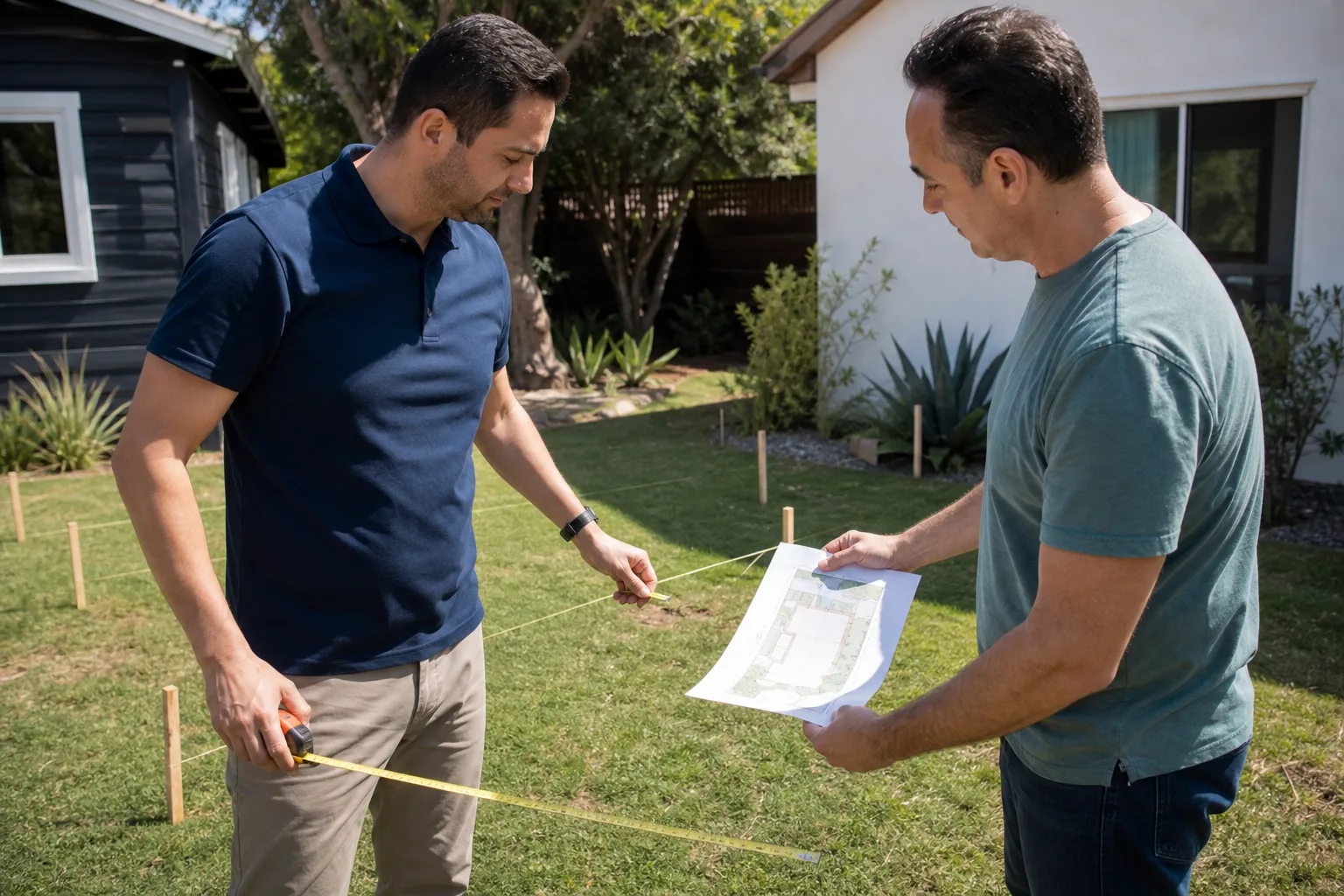
An ADU is not a weekend project, and in Ventura it’s not even a “competent handyman” project. The moment you’re considering adding square footage to your lot, you need someone who understands the city’s permit process, the coastal zone requirements where they apply, and the real cost structure of Ventura construction. If you’re looking at a bid and can’t tell whether it’s honest, or you’ve received three bids that differ by more than 20% and want to understand why, that’s a conversation worth having with a builder who will walk you through every line item. Sutton ADU Ventura offers free estimates in Ventura. Call (350) 238-1748 to schedule yours. We’ll walk your lot, assess the actual site conditions, and give you a written line-item breakdown that shows exactly where every dollar goes before you commit to anything.
Frequently Asked Questions
A detached ADU in Ventura costs $180,000 to $320,000 for 400-700 square feet before site work, while garage conversions run $90,000 to $160,000 and attached ADUs fall between $140,000 and $260,000. These Ventura-specific ranges include the local wage premium and coastal-zone engineering requirements that statewide averages miss. Call (350) 238-1748 for a free line-item estimate on your specific lot.
The pre-construction cost stack in Ventura totals $30,000 to $55,000 and includes design drawings, structural engineering, plan check, building permits, school impact fees where applicable, Ventura Water & Sanitation connection fees, and utility trenching. These fees are almost never included in the headline price a contractor quotes. Ask for them itemized before you sign anything.
It shouldn’t, if you have a true fixed-price contract with a written scope and every allowance specified in dollars. At Sutton ADU Ventura, we deliver a written price before any work begins, and if the scope doesn’t change, the price doesn’t change. Change orders are for when you change something, not for when the contractor underestimated. Call (350) 238-1748 to discuss a fixed-price build.
Plan for 6 to 10 months from first design meeting to certificate of occupancy for a detached ADU in Ventura. Garage conversions and JADUs typically run 3 to 5 months. The largest time variable is City of Ventura plan check, which runs 8 to 16 weeks depending on project complexity and current workload.
Only if your property falls within the California Coastal Commission zone, which covers the western portion of Ventura near the coast. Properties east of the 101 are generally outside the coastal zone. Our team can verify your parcel’s status during the free estimate at (350) 238-1748.
Ventura homeowners in 2026 are using ADU-specific construction loans, HELOCs, and the CalHFA ADU Grant Program, which offers up to $40,000 toward pre-construction costs for qualifying homeowners. Cash-out refinancing also funds a meaningful share of projects, particularly when the ADU is intended as a rental unit. For an exact project quote to bring to your lender, call (350) 238-1748.
The Bottom Line
A Ventura ADU in 2026 is a $90,000 to $320,000 investment depending on type and size, with $30,000 to $55,000 of that going to pre-construction fees before building begins. The homeowners who get the best outcomes are the ones who demand line-item bids, lock a fixed price in writing, verify every allowance with a dollar figure, and work with builders who understand Ventura’s specific permit and coastal requirements. Sutton ADU Ventura has been building in this market since 2006 under the Threshold Standard: a written price before work begins, a 365-Day Done Right Promise, and a crew whose name and photo you’ll know before they arrive. Start with a free estimate, and you’ll know exactly what your ADU costs before you spend a dime.
Need a detailed, no-obligation ADU cost breakdown for your Ventura property? Call Sutton ADU Ventura at (350) 238-1748 or visit our Sutton ADU Ventura home page to schedule your free on-site estimate. We’ll walk every line item with you, from Ventura Water & Sanitation fees to final paint, so you know the real number before you commit.
Written by Miles Hartwell, Owner at Sutton ADU Ventura, serving Ventura since 2006.