Last updated October 15, 2026
The Complete Guide to ADU in Ventura
Most Ventura homeowners who start researching accessory dwelling units never hear about the two things that kill more applications than anything else: the coastal zone overlay that runs through a surprising slice of the city, and the Ventura Water & Sanitation capacity check that happens before you ever get to a building permit. Which is a shame, because neither one is hard to navigate once someone explains it plainly. This guide walks you through the entire ADU process in Ventura, from the first lot check to the day you hand someone the keys, using local numbers, local rules, and the kind of straight answers that generic statewide guides simply don’t have room for.
Quick Answer
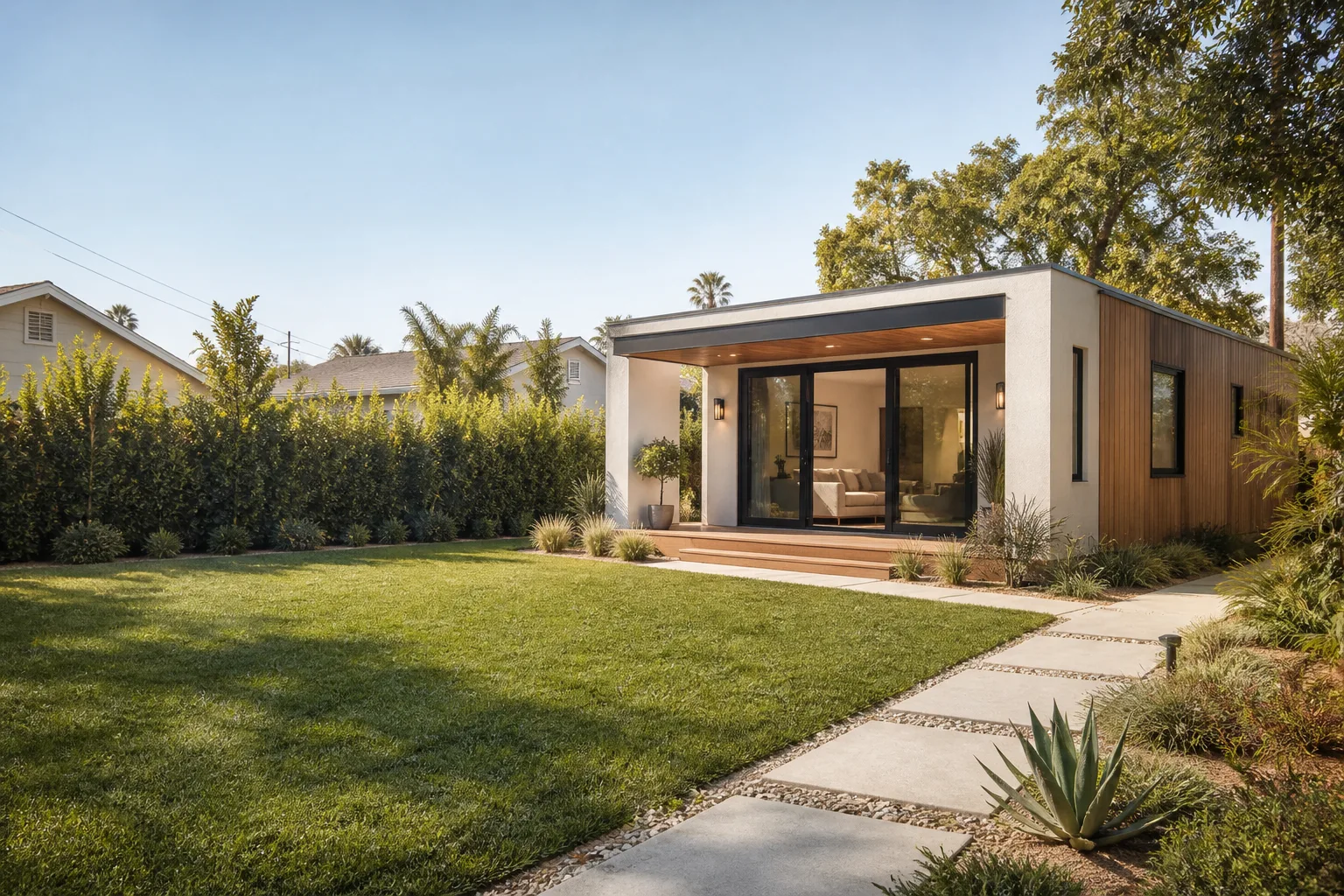
Building an ADU in Ventura typically costs $180,000 to $320,000 for a detached unit of 500 to 800 square feet, takes 12 to 18 months from design to move-in, and requires confirming your lot’s zoning, coastal overlay status, and sewer capacity before any plans get drawn. Most homeowners can build one, but the path runs through Ventura-specific rules that make hiring a local builder who knows them worth real money-see our How to Hire a ADU Contractor in Ventura: A Step-by-Step Guide for what to look for.
Table of Contents
- 1. The Lot Check: Zoning, Setbacks, and the Coastal Overlay
- 2. What an ADU Actually Costs in Ventura, by Type
- 3. The Ventura Water & Sanitation Capacity Check
- 4. Design, Permitting, and the City Review Timeline
- 5. Construction: What Happens On-Site, and Who You’ll See
- 6. How to Verify a Contractor’s License, Insurance, and Crew Before They Show Up
- 7. Prefab and Modular ADUs in Ventura: When They Work
- 8. A Realistic Timeline, With the Parts That Actually Delay Things
- Common Mistakes to Avoid
- When to Call a Professional
- Frequently Asked Questions
- The Bottom Line
1. The Lot Check: Zoning, Setbacks, and the Coastal Overlay
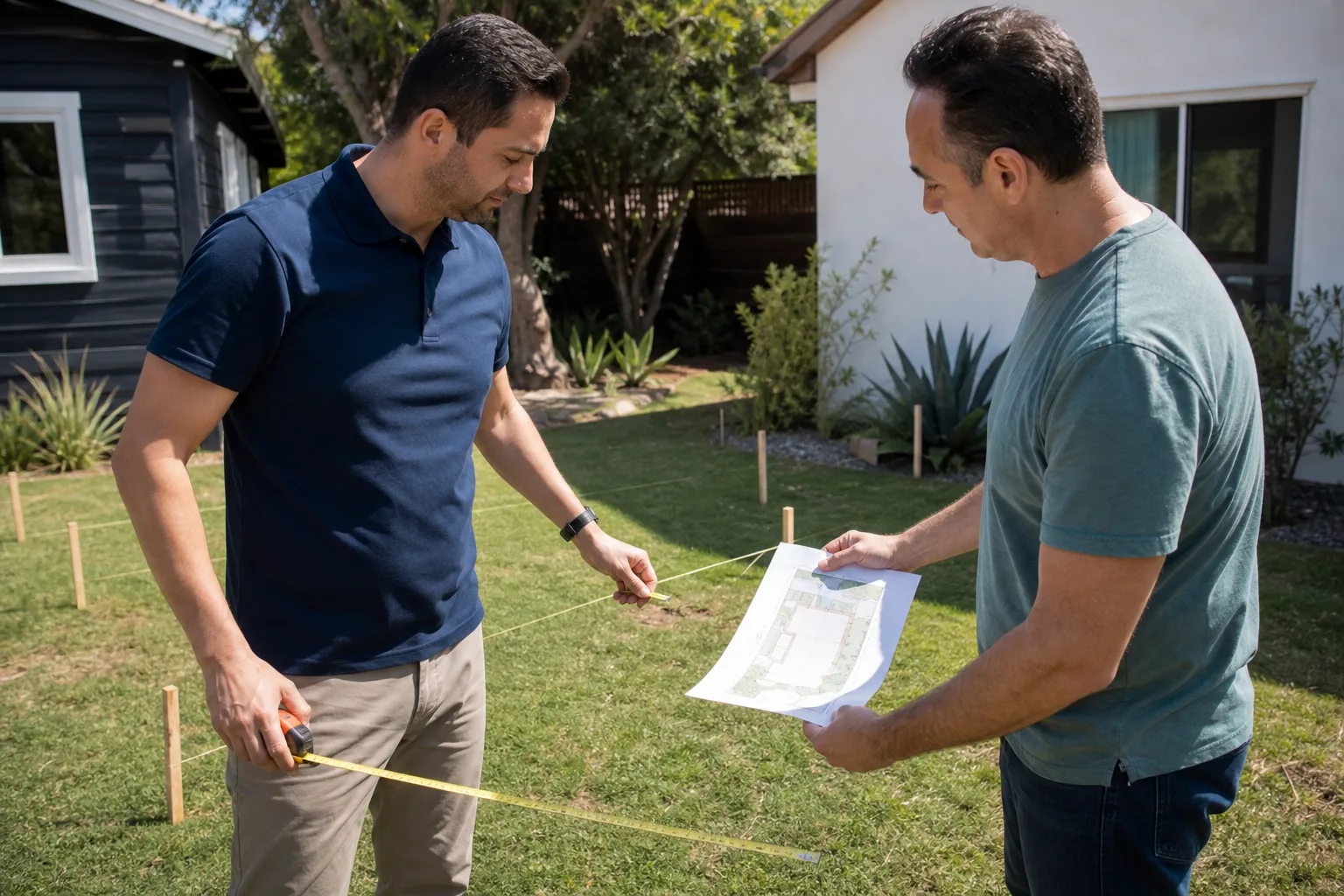
Before you spend a dollar on plans, you need to know three things about your Ventura lot: what zone it sits in, whether the coastal zone overlay covers it, and what setback rules apply to your specific parcel. A setback, by the way, is the required gap between your new structure and the property line, and Ventura enforces this differently depending on whether you’re in an R1 single-family zone or an R2 zone that allows a second unit by right.
Ventura’s coastal zone overlay is the quiet complication nobody mentions. Portions of the city west of downtown, including stretches near Ventura Avenue and areas close to the Ventura River, fall under Coastal Commission jurisdiction, which can add a layer of review and occasionally restrict rooflines, height, or exterior materials. If your lot is in the coastal zone, your ADU may need a coastal development permit on top of the standard building permit, and the review clock gets longer. We’ve seen homeowners lose eight weeks to a coastal review they didn’t know they needed until the plans were already drawn.
Here’s what to check on your own lot, in order:
- Zone district: Look up your parcel on the City of Ventura’s zoning map. R1 and R2 zones both allow ADUs under state law, but R2 lots sometimes trigger different density calculations.
- Coastal overlay: Check the city’s coastal zone boundary map. If you’re inside it, plan for an extra permit and a longer timeline.
- Setback reality: Ventura generally requires 4-foot side and rear setbacks for detached ADUs up to 16 feet in height, but corner lots, flag lots, and zero-lot-line conditions change these numbers. Measure your actual yard before you fall in love with a plan that doesn’t fit.
- Existing structures: Garage conversions have different setback implications than new builds because the structure already exists. Converting a garage that sits 2 feet from the property line is often allowed even when that same setback would block a new detached unit.
If this sounds like a lot to sort through, it is. A local ADU builder in Ventura can usually pull this lot check together in a few days, and we do it as part of the free estimate rather than as a separate charge.
2. What an ADU Actually Costs in Ventura, by Type
Ventura’s cost picture is not the statewide average. Our coastal labor rates, the mild requirement for higher wind zones in some hillside neighborhoods, and the age of Ventura’s housing stock all push certain line items up. Here are the realistic all-in ranges we quote for Ventura projects, including design, permits, construction, and standard site work, as of 2025:
| ADU Type | Typical Size | Realistic All-In Cost |
|---|---|---|
| Detached ADU (new build) | 500 – 800 sq ft | $180,000 – $320,000 |
| Attached ADU (addition) | 400 – 700 sq ft | $160,000 – $260,000 |
| Garage conversion | 300 – 500 sq ft | $110,000 – $180,000 |
| Junior ADU (JADU) | 300 – 500 sq ft | $80,000 – $140,000 |
What moves the number in Ventura specifically:
- Sewer or water line upgrades: If your existing lateral can’t handle the added fixture count, Ventura Water & Sanitation may require a new connection or upsized line. That’s routinely $8,000 to $20,000 depending on the street and the distance to the main, and it’s the single most common reason a quote comes back higher than the homeowner expected.
- Hillside foundation work: Neighborhoods in the Ventura foothills and parts of east Ventura near the hills often need engineered foundations and sometimes caissons, adding $15,000 to $40,000 over flat-lot work.
- Electrical service capacity: Many older Ventura homes have 100-amp panels. An ADU with full kitchen and laundry typically needs a 200-amp upgrade, budgeted at $4,000 to $7,000.
- Coastal zone exterior requirements: If the overlay requires specific cladding or finishes, that can add 5 – 10% to the exterior budget. We work with James Hardie systems regularly for exactly this reason, since they meet coastal durability standards without a massive premium.
One thing we tell every Ventura homeowner: get a written line-item quote that breaks out site work separately from the structure, a topic covered in our Home Addition Contractor Maintenance Checklist for Ventura Homeowners. If a builder hands you a single number with no breakdown, you can’t tell whether they’ve actually evaluated your lot or just emailed you a template. Our written price covers the full scope before any tool is lifted, and the number on that page is the number you pay, not a starting bid.
3. The Ventura Water & Sanitation Capacity Check
This is the step that surprises nearly every first-time ADU owner in Ventura, and it happens before permits get pulled. Ventura Water & Sanitation requires a capacity check for any project that adds plumbing fixtures to a parcel. The question they’re answering is simple: can the existing water service and sewer lateral serving your house handle another bathroom, kitchen, and laundry?
Here’s what the process looks like:
- Application filed with the city: As part of your ADU permit package, you submit a water and sewer capacity request to Ventura Water & Sanitation.
- System evaluation: The department reviews your existing meter size, the line size of your water service, and the condition and capacity of your sewer lateral.
- Possible upgrade requirements: If capacity is short, you’ll be required to upsize your water meter, replace or line your sewer lateral, or both, before construction begins.
- Timing: This review typically takes 3 to 6 weeks, and the required upgrades can add $8,000 to $20,000 to the project, paid to the utility or your contractor, depending on the scope.
The smart move is to have your builder run a preliminary capacity check before you commit to an ADU design. If your sewer lateral predates 1980, there’s a real chance it’s clay pipe, which Ventura Water & Sanitation will flag for replacement when the added load hits their review desk. Knowing that number early changes whether a detached ADU or a smaller JADU makes sense for your budget.
4. Design, Permitting, and the City Review Timeline
Once your lot check and capacity review come back clean, the design and permitting phase in Ventura typically runs 4 to 7 months depending on the project’s complexity and whether the coastal overlay applies. Here’s the step-by-step:
- Schematic design (2 – 4 weeks): Your builder or architect produces floor plans, elevations, and site plans matching your lot’s actual conditions.
- Plan submittal (1 – 2 weeks): The full drawing set goes to the City of Ventura’s Building and Safety division, along with the Ventura Water & Sanitation application if it wasn’t filed separately.
- City plan check (6 – 12 weeks): City reviewers check the drawings against Ventura Municipal Code, state ADU law, and overlay requirements. Coastal overlay projects can add 4 to 8 weeks to this step.
- Review comments and revisions (2 – 4 weeks): Rare is the plan set that comes back with zero comments. Your builder revises and resubmits.
- Permit issuance (1 – 2 weeks): Once all departments sign off, the permit is issued and you can schedule construction.
Total permits and city fees for a detached ADU in Ventura typically land between $8,000 and $15,000, including the water and sanitation tap fees, building permits, and any school or park impact fees that apply. We include these in our written quote so you’re not surprised by a fee schedule you didn’t know existed.
If you’re also planning work inside your main house at the same time, this is where a home addition contractor in Ventura can coordinate both permit packages, which sometimes speeds review because the city sees one coherent project rather than two sequential ones.
5. Construction: What Happens On-Site, and Who You’ll See
An ADU build in Ventura follows the same physical sequence anywhere else, but the people on your property matter more here than in a smaller remodel, because they’ll be there for months, not days. Here’s the construction sequence:
- Site prep and foundation (3 – 6 weeks): Excavation, formwork, concrete pour. For hillside lots, this phase runs longer due to foundation engineering.
- Framing and roofing (4 – 8 weeks): The structure goes up and gets dried in. This is the most visually dramatic phase.
- Mechanical, electrical, plumbing rough-in (3 – 5 weeks): All the systems go in the walls before drywall closes everything up. This phase requires city inspections at each trade’s milestone.
- Insulation and drywall (2 – 3 weeks): The interior comes together and starts looking like a real home.
- Finishes (4 – 8 weeks): Flooring, cabinets, tile, paint, fixtures. Custom work stretches this phase; stock finishes tighten it.
- Final inspections and occupancy (2 – 4 weeks): City inspectors sign off, Ventura Water & Sanitation verifies the connection, and you get your certificate of occupancy.
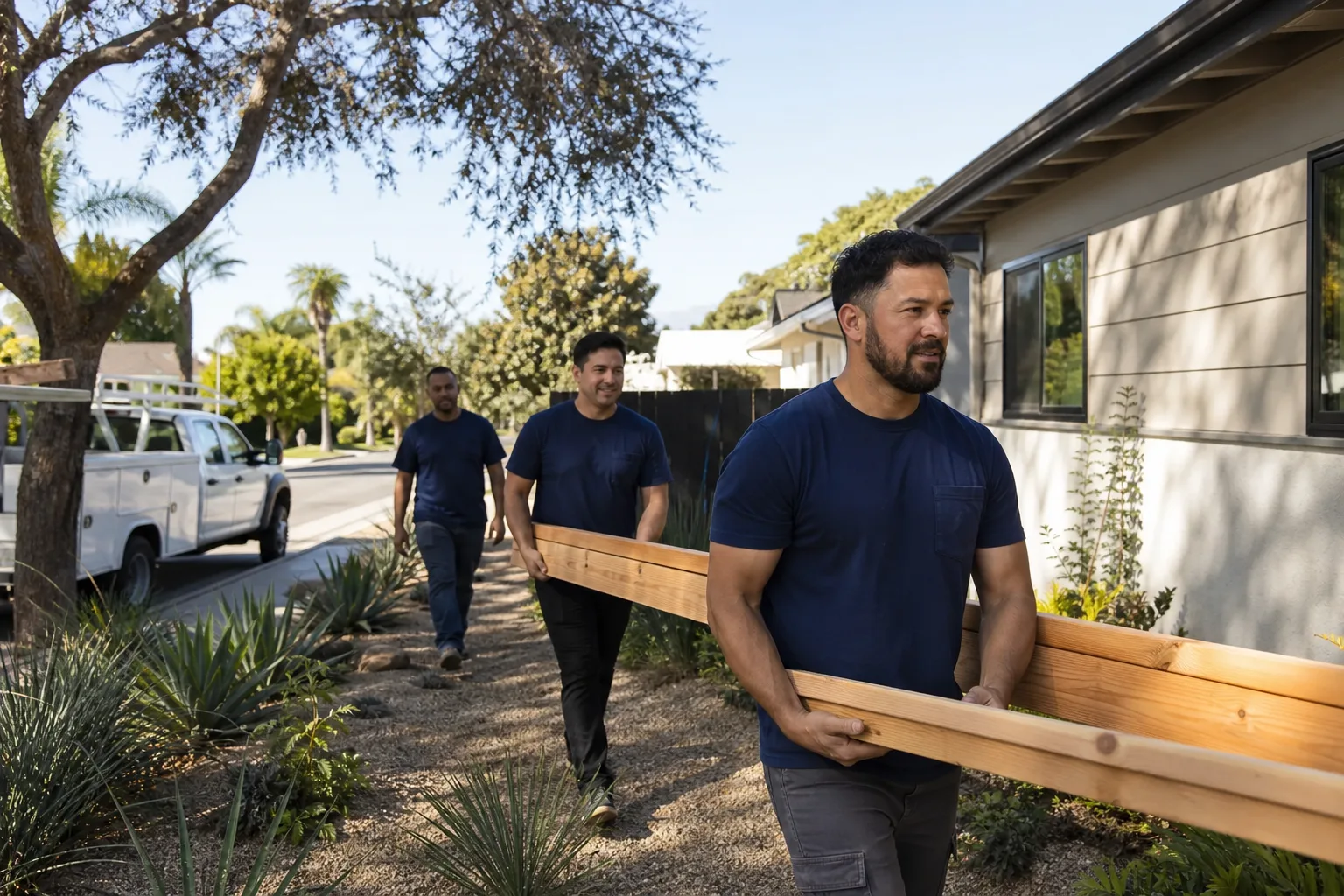
Who you’ll see on-site: a project lead who runs the day-to-day, trade crews for foundation, framing, electrical, plumbing, and finishes, and city inspectors at scheduled milestones. One thing we insist on at Sutton ADU Ventura: you know exactly who is coming before they arrive. The Threshold Standard we operate under means every person assigned to your project has been background-checked and identity-verified, and their name and photo are sent to you before they step on the property. Your project lead arrives in a marked uniform and shows a photo ID badge at the door the first time you meet. Not because we think other crews are dangerous, but because you should never have to wonder who’s in your backyard.
6. How to Verify a Contractor’s License, Insurance, and Crew Before They Show Up
An ADU is not a toilet swap. Someone will be on your property for the better part of a year, and some of that time you may be home alone, or home with young children, or an older homeowner who values knowing the face at the door. Vetting matters more here than any smaller project. Here’s how to do it properly in California, or read our deeper guide on DIY vs Professional ADU: The Ventura Homeowner’s Decision Guide:
- Check the license: Every contractor in California must hold a General B license or a specialty license for the work performed. Look them up on the Contractors State License Board website. Confirm the name on the license matches the name on your quote, and check for any active complaints or discipline.
- Verify insurance directly: Ask for a certificate of insurance naming you as an additional insured. Call the carrier to confirm the policy is active. Don’t accept a photocopy at face value.
- Ask who is actually doing the work: Many GCs sub out every trade. Ask whether the crew is employed directly or subcontracted, and whether subs are also licensed and insured. A gap here is where uninsured workers end up on your property.
- Request names and photos before anyone arrives: This is a standard we think every homeowner should demand. You should know the name and face of every person scheduled to be on-site before they show up.
- Get the warranty in writing: A verbal “we’ll stand behind it” is worth nothing. The written warranty should state what’s covered, for how long, and what happens if something fails. Our 365-Day Done Right Promise is stamped on every project in writing: if the work isn’t right within a full year, we make it right, plus a free second visit if a repair or element fails. No haggling, no fee.
This checklist is the same one we’d hand a family member. It takes an hour total, and it’s the difference between a build you enjoy watching and one that becomes a source of low-grade anxiety for a year.
7. Prefab and Modular ADUs in Ventura: When They Work
Ventura has seen a steady increase in prefab and modular ADU projects, and for good reason: factory construction shrinks site time, reduces weather delays, and locks quality control into a controlled environment. We have direct experience with several product lines, including Dvele, Cover, and Mighty Buildings, each of which fits a different Ventura lot profile.
Dvele units are higher-end, health-focused prefab homes built for energy performance and indoor air quality. They make sense on flat lots in neighborhoods like Midtown or Montalvo where the lot can accommodate a crane set and the budget supports premium finishes. Expect the unit cost to run higher than a comparable site-built ADU, but the site time compresses dramatically.
Cover produces precision-fit panelized ADUs that work well on tighter lots, including many of the 5,000-square-foot parcels carved through central Ventura. Their process is closer to assembly than traditional framing, which appeals to homeowners who want a predictable schedule and a factory-tested building envelope.
Mighty Buildings uses 3D-printed composite panels and offers a genuinely different structural approach that’s worth evaluating if you’re building on a hillside lot where weight and foundation requirements matter. The material resists moisture and fire better than wood framing, which matters in parts of east Ventura with fire-zone designations.
The catch with any prefab line in Ventura: site work, utilities, and permits don’t shrink. You still need the capacity check, the foundation, the sewer connection, and the city sign-offs. Prefab changes the structure delivery, not the local process. A builder who does both site-built and prefab can tell you honestly which path fits your lot.
8. A Realistic Timeline, With the Parts That Actually Delay Things
From first conversation to move-in, a Ventura ADU realistically runs 12 to 18 months. Here’s the breakdown, phase by phase:
- Lot check and feasibility (2 – 4 weeks): Zoning, coastal overlay, capacity preliminary review. Delays here are rare if the builder knows what to check.
- Design and engineering (6 – 10 weeks): Drawings take time, and hillside lots or unusual parcels stretch it.
- Ventura Water & Sanitation review (3 – 6 weeks): This runs in parallel with plan check, but upgrade requirements discovered here can pause everything.
- City plan check (6 – 12 weeks): Longer for coastal overlay projects. The city’s current review load matters more than your project’s merits.
- Permit issuance (1 – 2 weeks): Fast once everything clears.
- Construction (6 – 10 months): Site work and foundation 1 – 2 months, framing and systems 2 – 3 months, finishes 2 – 4 months, inspections 1 month.
What actually causes delays in Ventura, in our experience:
- Discovering sewer lateral problems during the capacity check: We’ve had projects where a 70-year-old clay lateral triggered a replacement requirement that added six weeks and $12,000 to the job. Finding this early is the entire point of the preliminary check.
- Coastal overlay review: Eight to twelve weeks added, and there’s no shortcut. Your builder should flag this before plans are drawn.
- Rainy-season foundation work: Ventura’s winter rains can push foundation pours back weeks. Starting site work in spring or early summer avoids this entirely.
- Plan check comment cycles: Each round of city comments costs 2 to 4 weeks. Thorough plans from a local builder who knows Ventura’s reviewers produce fewer rounds.
- Subcontractor scheduling: Trade crews book out months ahead. Builders with stable trade relationships weather this better than those cold-calling subs per project.
None of these delays are exotic. They’re the normal friction of building in a coastal California city, and the way to handle them is to plan for them. If you’re also considering expanding the footprint of your main house, a room addition contractor in Ventura can run that scope through the same permit package and timeline, which often saves months versus sequencing the projects.
Common Mistakes to Avoid
- Skipping the lot check before buying plans: We see homeowners spend $4,000 on design work for a detached ADU that doesn’t fit their lot’s setbacks. The lot check costs nothing when it’s part of a free estimate.
- Ignoring the coastal overlay question: If your Ventura lot is in the coastal zone and you don’t know it, you’ll find out during plan check, after you’ve already paid for drawings and lost eight weeks to a review you didn’t schedule.
- Under-budgeting for sewer and water upgrades: The capacity check isn’t optional, and the upgrades it triggers are real money. Budget $8,000 to $20,000 as a contingency line until you know otherwise.
- Hiring a builder who won’t provide a written line-item quote: A single number with no breakdown hides more than it reveals. If the site work line isn’t separated from the structure line, you can’t tell whether they’ve actually looked at your property.
- Not asking who will be on-site before work starts: You’ll share your property with this crew for months. If the builder won’t tell you names and provide photos before anyone arrives, that’s the wrong builder for a project this long.
- Accepting a verbal warranty: The 365-Day Done Right Promise works because it’s written and specific. “We stand behind our work” doesn’t survive a dispute; a written one-year guarantee does.
- Choosing a plan before checking the existing electrical panel: A 100-amp panel turns a $180,000 ADU into a $187,000 ADU overnight. Know your panel capacity before you commit to a design with full kitchen and laundry.
When to Call a Professional
Building an ADU in Ventura is not a DIY project, and it’s also not something to hand to a generalist who does one ADU a year. Call a professional when you want the lot check done properly, when the coastal overlay or capacity check introduces questions you can’t answer yourself, and when you want a written price you can plan around rather than an estimate that drifts. The free estimate is the right starting point, and it costs nothing to find out whether your lot actually works. For more guides & resources on Ventura ADU projects, explore our blog. Sutton ADU Ventura offers free estimates in Ventura. Call (350) 238-1748 and we’ll walk your lot, run the checks, and hand you a written price before any work begins.
Frequently Asked Questions
A detached ADU in Ventura typically costs $180,000 to $320,000 all-in, while garage conversions run $110,000 to $180,000 and JADUs $80,000 to $140,000, including design, permits, and site work. Your actual number depends on lot conditions, sewer capacity, and whether the coastal overlay applies. Call (350) 238-1748 for a written line-item quote specific to your property.
Most Ventura ADU projects run 12 to 18 months from initial lot check to move-in, with design and permitting taking 4 to 7 months and construction another 6 to 10 months. Coastal overlay review, sewer upgrade requirements, and rainy-season foundation work are the most common delays.
Yes, every ADU in Ventura requires building permits, and a garage conversion also requires the same Ventura Water & Sanitation capacity review as a new build. The permitting path is often shorter than a detached ADU because the structure already exists, but the permit is still mandatory.
The coastal zone overlay is a geographic designation covering portions of west Ventura that adds an extra layer of Coastal Commission review to building projects, including ADUs, and can restrict height, rooflines, and exterior materials. Check your parcel against the city’s coastal zone boundary map before designing anything.
Yes, Ventura allows two-story ADUs up to 16 feet in height in most zones, but the coastal overlay and some hillside fire zones impose stricter limits. Your builder should verify the specific height allowance for your parcel during the lot check.
Yes, prefab and modular ADUs from manufacturers like Dvele, Cover, and Mighty Buildings are viable in Ventura and can reduce on-site construction time, but they don’t eliminate the local process: you still need the capacity check, foundation work, city permits, and utility connections. A builder with prefab and site-built experience can advise which path fits your lot and budget.
The Bottom Line
An ADU in Ventura is achievable for most homeowners with a standard R1 or R2 lot, a realistic budget of $180,000 to $320,000 for a detached unit, and a builder who runs the lot check, capacity review, and coastal overlay verification before a single drawing is produced. The process takes 12 to 18 months and has a predictable sequence: lot check, design, permits, construction, occupancy. The difference between a smooth build and a stressful one comes down to two things: knowing the Ventura-specific rules before you start, and trusting the people on your property. This guide gave you the first. For the second, call Sutton ADU Ventura home at (350) 238-1748 and we’ll put a written price and a verified crew in front of you before anything else happens.
Written by Miles Hartwell, Owner at Sutton ADU Ventura, serving Ventura since 2006.