Last updated October 15, 2026
DIY vs Professional ADU: The Ventura Homeowner’s Decision Guide
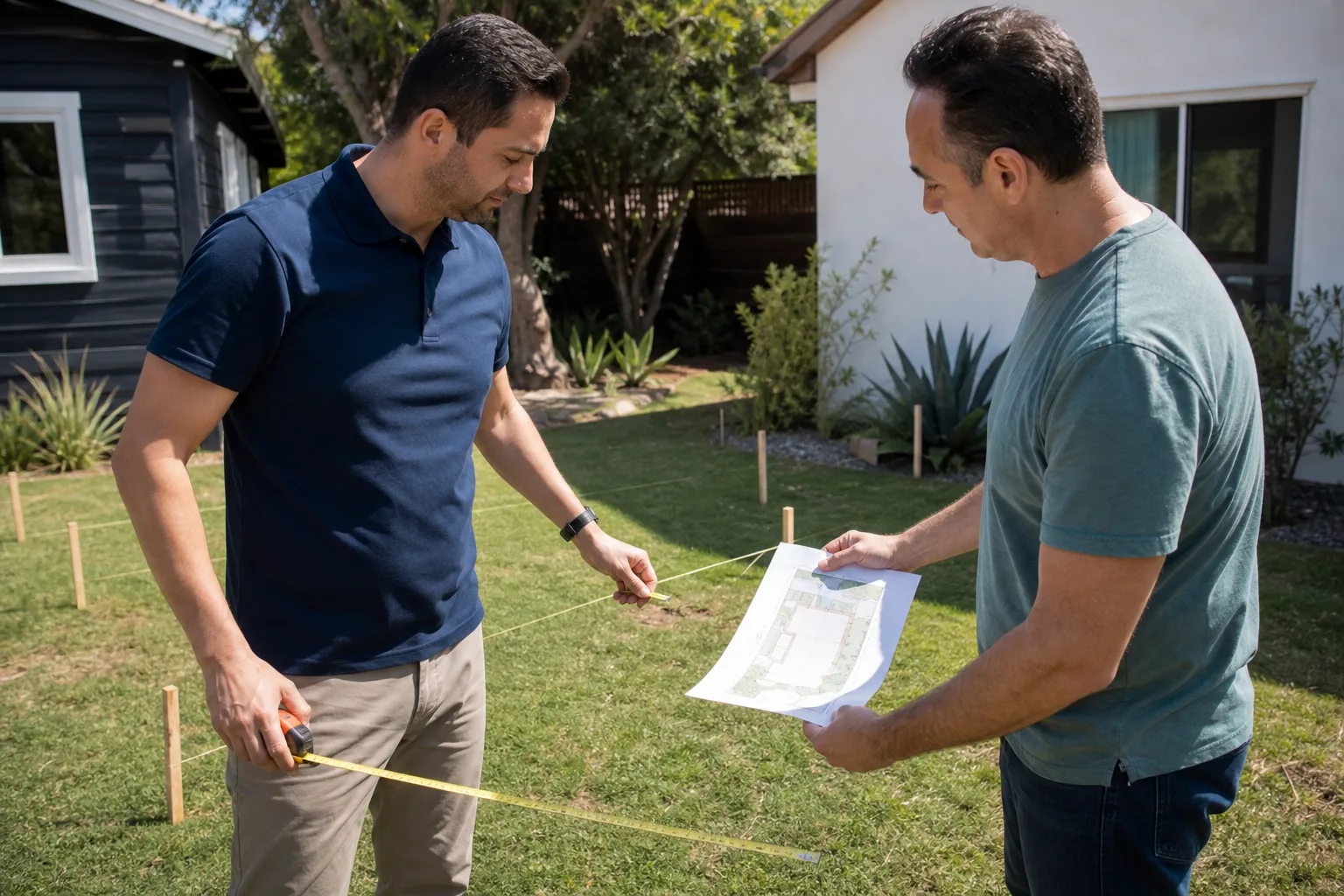
Most Ventura homeowners start the ADU conversation by asking what a builder will charge. They skip the more expensive question: what happens to a property’s title when the work is owner-built. California’s owner-builder permit rules allow you to act as your own general contractor, but they attach a disclosure requirement to your deed that follows the house to every future sale. That single piece of paper has delayed escrows, triggered lender-required inspections, and complicated refinances for Ventura homeowners who thought they’d saved thirty thousand dollars by pulling their own permit. This guide walks through the real decision points: permit liability, trade licensing, inspection risk, resale disclosure, and the narrow tasks where DIY actually makes sense.
Quick Answer
DIY makes financial sense on an ADU only when you have genuine trade experience, plan to own the property indefinitely, and limit your scope to finish work, landscaping, paint, and procurement. Professional construction is the safer choice for structural, electrical, plumbing, and HVAC work in Ventura because California’s owner-builder rules put code compliance, defect liability, and resale disclosure squarely on your personal record. A licensed ADU contractor absorbs that liability and provides a documented paper trail that Ventura buyers and lenders expect. If you’re unsure how to choose one, see our guide on How to Hire a ADU Contractor in Ventura: A Step-by-Step Guide.
Table of Contents
- What the Owner-Builder Permit Actually Authorizes in California
- The Title Disclosure Nobody Mentions Until Escrow
- What a Capable DIY Homeowner Can Realistically Handle
- How Ventura’s Building Department Inspects ADUs
- The Hidden Cost of DIY Mistakes in ADU Construction
- A Partial DIY Framework That Protects Your Investment
- Prefab and Modular ADUs: Where the DIY Lines Shift
- Common Mistakes to Avoid
- When to Call a Professional
- Frequently Asked Questions
What the Owner-Builder Permit Actually Authorizes in California
California Health and Safety Code Section 50652 lets a property owner pull a building permit for work on their own residence without holding a contractor’s license. That sounds straightforward until you read the fine print. The owner-builder permit authorizes you to act as the general contractor of record. It does not authorize you to perform every trade yourself.
Here is what the permit means, translated plainly:
- You are the general contractor. You schedule work, hire subcontractors, coordinate inspections, and carry the legal responsibility for code compliance. If a sub fails, you are the one the building department calls.
- Electrical work still requires a licensed electrician. California does not let an owner-builder pull an electrical permit unless they hold a C-10 electrical license. You can perform minor electrical work only if it falls under narrow exemptions, and an ADU’s panel, subpanel, and branch circuits do not fall under those exemptions in Ventura’s interpretation.
- Plumbing still requires a licensed plumber. A C-36 licensed contractor must pull plumbing permits for drain lines, supply lines, gas lines, and water heater installation. An owner-builder cannot legally sign off on this work.
- HVAC still requires a licensed contractor. Duct systems, mini-split installation, and combustion appliance venting require a C-20 HVAC license for permit sign-off in most California jurisdictions, including Ventura.
- You personally sign a verification form. The permit application includes a declaration that you are performing the work yourself or hiring licensed subs under your direction, and that you understand the legal obligations. That signed form becomes part of the public permit record.
What this means in practice: even a committed DIY homeowner in Ventura will still need to hire licensed subcontractors for the electrical, plumbing, and mechanical phases of an ADU. The owner-builder permit simply makes you the coordinator and the legally exposed party. Miles Hartwell has watched Ventura homeowners discover this limitation mid-project, after framing was up and the electrical rough-in inspection was scheduled.
The Title Disclosure Nobody Mentions Until Escrow
We referenced this earlier, and it deserves its own section because it is the single most consequential fact in the DIY-vs-professional ADU decision. California Civil Code Section 1102 requires sellers to disclose material facts about a property. When a structure was built under an owner-builder permit, that fact is material.
The disclosure works like this:
- You pull an owner-builder permit for your ADU. The permit is assigned to your name, not a contractor’s license number.
- You complete the project. The building department signs off on final inspection, assuming everything passed.
- Years later, you list the property. The seller disclosure form asks whether any structures were owner-built. You answer honestly, because failing to disclose is a fraud claim waiting to happen.
- The buyer’s lender reviews the disclosure. Many conventional lenders now require a third-party structural inspection before funding a mortgage on a property with an owner-built ADU. Some will not lend at all without a licensed contractor’s sign-off on the structure.
- The buyer negotiates. A buyer who knows the ADU was owner-built will often demand a price reduction, a repair credit, or both, to offset the perceived risk. In Ventura’s current market, where ADUs command $150,000 to $400,000 in added value depending on size and finish, that negotiation can cost you more than the money you saved by not hiring a contractor.
We are not saying every owner-built ADU fails inspection or torpedoes a sale. We are saying the disclosure is mandatory, and its effect on financing is real. A professionally built ADU from ADU Builders in Ventura carries a contractor’s license number, a permit history tied to that license, and a warranty trail. That documentation is what lenders and buyers in Ventura expect to see.
What a Capable DIY Homeowner Can Realistically Handle
Let’s be fair to the DIY camp. There are legitimate tasks within an ADU project that a skilled homeowner can perform safely, legally, and well. These tasks do not require a permit, do not trigger the owner-builder disclosure, and can trim $10,000 to $25,000 off the total project cost when done properly. For ongoing upkeep tips, see our Seasonal ADU Care for Ventura: Year-Round Homeowner’s Guide.
Here is a realistic list of DIY-friendly ADU tasks in Ventura:
- Demo and site prep. Clearing landscaping, removing a Tuff Shed’s interior panels, or taking down non-load-bearing walls (after confirmation from a structural engineer).
- Finish carpentry. Installing baseboards, window trim, door casings, closet shelving.
- Painting. Interior and exterior. Ventura’s coastal air means exterior paint on an ADU needs mold-resistant primer and a finish rated for salt exposure, but the application itself is within DIY reach.
- Flooring. Luxury vinyl plank, laminate, and engineered hardwood installations are achievable for a careful homeowner with the right tools.
- Fixtures. Faucets (once rough-in is signed off), light fixtures (after electrical final), cabinet hardware, towel bars.
- Landscaping and hardscape. Paths, patios, drought-tolerant planting, and drainage swales around the ADU footprint.
- Procurement. Sourcing materials, selecting finishes, managing deliveries. A homeowner who wants to control costs can legitimately own the purchasing function while a contractor manages installation.
The pattern here: these are finish tasks. They sit on top of the structural, electrical, plumbing, and mechanical systems. They do not require a permit, they do not carry liability, and they do not create a disclosure event. If you want to DIY portions of an ADU, this is where the risk is lowest and the savings are real.
How Ventura’s Building Department Inspects ADUs
Ventura’s building department follows the California Residential Code with local amendments for coastal wind zones, seismic provisions, and energy efficiency. The ADU inspection sequence is not a single walk-through. It is a staged process that requires multiple inspections at specific completion points, and each one must be scheduled, passed, and documented.
The typical inspection sequence for a Ventura ADU looks like this:
- Foundation inspection. Before concrete is poured, an inspector verifies rebar spacing, footing depth, and anchor bolt placement.
- Framing inspection. After walls and roof are framed but before insulation or drywall goes up. The inspector checks wall bracing, shear panels, roof ties, and window header sizing. Seismic detailing matters here because Ventura sits in a high-seismic zone.
- Rough electrical inspection. A licensed electrician’s permit is pulled; the inspector verifies wire gauge, box fill, grounding, and AFCI/GFCI placement.
- Rough plumbing inspection. A licensed plumber’s permit; the inspector checks slope, venting, pipe sizing, and water heater location.
- Mechanical inspection. HVAC, if installed, verified for duct sealing and equipment sizing.
- Insulation inspection. R-values verified against California’s Title 24 energy standards, which are more stringent than most states and directly affect your ADU’s energy bill.
- Drywall and final inspection. After all trades complete their finals, the building department does a composite final walk.
If any inspection fails, the project stops. A failed framing inspection in Ventura, for example, might mean removing improperly installed shear panels and re-nailing them to spec. A failed rough electrical inspection might mean pulling wire out of the walls. Here is the part DIY guides often skip: when you are the owner-builder, you are the one scheduling these inspections, standing on site while they happen, and fixing whatever fails. A licensed contractor’s crew handles all of it, and their license absorbs the correction cost. The home addition contractors in Ventura who do this work daily schedule inspections in the correct order, often passing first time because they know what Ventura inspectors look for.
The Hidden Cost of DIY Mistakes in ADU Construction
The money you save by not hiring a general contractor can evaporate in rework costs that are invisible until they happen. We have seen Ventura ADU projects where the framing passed, drywall went up, and then the electrical rough-in failed because the owner-builder did not know that Ventura requires a dedicated 20-amp circuit for the mini-split condenser. The fix meant opening the walls back up.
Here are the hidden costs that shows up in our experience, not just in theory:
- Failed inspections mean rescheduling fees. Ventura charges a re-inspection fee each time an inspector returns for a failed item. Three failures across three trades can add $800 to $1,500 in fees alone.
- Rework behind closed walls. A misplaced electrical box or undersized header discovered after drywall means demo, repair, and re-drywall. Figure $2,000 to $6,000 per reopened wall section depending on what is inside it.
- Extended temporary housing costs. If you are living in the main house while the ADU is under construction, a two-month delay means two more months of shared walls, noise, and dust. If you are renting out the main house and building the ADU for yourself, the delay is two months of lost rental income. In Ventura, a modest two-bedroom rents for $2,800 to $3,500 a month. A four-month delay is $11,000 to $14,000.
- Material waste from inexperience. Order the wrong window size, cut the wrong length of lumber, mix deck mud incorrectly. These mistakes are not catastrophic individually, but they bleed $500 to $3,000 quietly across a project.
- Insurance gaps. Your homeowner’s policy may not cover an owner-built structure under construction. A licensed contractor carries general liability and workers’ compensation. You carry whatever your policy happens to include, which is often nothing for an unpermitted or owner-built ADU in progress.
- Financing risk. If you paid cash for materials and labor as you went, you cannot easily refinance the ADU’s added value until the project is fully permitted and finaled. A professional build with a clean permit record refinances more smoothly.
None of this means DIY is always wrong. It means the savings calculation has to include rework, delay, and insurance exposure, not just the difference between contractor labor rates and doing it yourself.
A Partial DIY Framework That Protects Your Investment
Here is the framework we give Ventura homeowners who want to be hands-on without taking on the legal exposure of an owner-builder permit. The principle is simple: own the finishes, hire the systems. The systems, meaning foundation, framing, electrical, plumbing, HVAC, and weatherproofing, are where liability lives. The finishes are where sweat equity pays off.
A workable partial DIY plan for a Ventura ADU looks like this:
- Hire a licensed ADU contractor for the structural package. Foundation through drywall. This includes permits, inspections, trades, and the manufacturer warranty where applicable. The contractor’s license covers code compliance and construction defects.
- Reserve the finish scope for yourself. Paint, trim, flooring, fixtures, landscaping, hardware. Agree on this split in writing before the contract is signed so there is no ambiguity about who does what.
- Get a written price for the full scope before you start. Sutton ADU Ventura delivers a written price before any work begins, on every project. That number should specify exactly which tasks are contractor scope and which are homeowner scope. No ambiguity means no surprise invoices.
- Communicate the plan to the building department. Your contractor pulls the permit. You do finish work after final inspection, or during the appropriate phase as long as it does not interfere with the inspector’s access. In Ventura, painting and flooring can often proceed while final inspections are being scheduled, but confirm this with your contractor.
- Document your DIY work. Keep a running list of what you did, when you did it, and what materials you used. This creates a paper trail for future buyers, even though you are not pulling a permit. Receipts for flooring, paint, and fixtures demonstrate careful ownership.
This framework gives you the cost savings and the satisfaction of doing work with your own hands, without the title disclosure, the permit liability, or the inspection coordination burden. It also keeps the project moving on a professional schedule, which matters when Ventura’s coastal fog slows down exterior work in the early morning.
Prefab and Modular ADUs: Where the DIY Lines Shift
Prefab and panelized ADU systems complicate the DIY conversation in a useful way. Companies like Abodu and Cover sell semi-complete structures that arrive on a truck, get craned onto a prepared foundation, and get finished on site. The off-site manufacturing process moves much of the framing, plumbing, and electrical work into a factory, where it is inspected to state and federal standards before it ever reaches Ventura.
Where prefab shifts the DIY math:
- Less framing work on site. A Cover or Abodu unit arrives with walls, windows, and much of the mechanical rough-in already assembled. The on-site work is foundation, utility connection, and finish.
- Factory quality control replaces some field inspection risk. The factory’s process includes internal QA and third-party inspections. Ventura still requires on-site permits and inspections for foundation, utility hookups, and final occupancy, but the variables are fewer.
- Still need licensed subs for hookups. The utility connections, the electrical panel upgrade if required, and the sewer or septic tie-in all require licensed contractors. A prefab unit does not eliminate the licensed trade requirement.
- James Hardie and Tuff Shed options. For a garage conversion or a semi-attached addition, a Tuff Shed structure with James Hardie cladding can be a legitimate starting point, but the conversion work, insulation, electrical, and plumbing still require permits and licensed work.
The practical takeaway: prefab reduces the amount of on-site work, which reduces inspection frequency in the middle of the project. It does not reduce permit liability or the disclosure requirement if you act as the owner-builder. That distinction is easy to miss in marketing materials that show a finished ADU arriving on a truck.
Common Mistakes to Avoid
- Pulling an owner-builder permit because a YouTube video made it look easy. The permit itself is a form. The legal exposure that comes with it is permanent for as long as you own the property and follows the title if you sell.
- Skipping the electrician because “my brother-in-law knows wiring.” Unpermitted electrical work on an ADU in Ventura is a failure point at inspection, a fire risk, and a disclosure problem at sale. Hire the licensed electrician.
- Underestimating Title 24 energy requirements. California’s energy code requires specific insulation values, window ratings, and HVAC efficiency that DIY builders routinely miss. A failed Title 24 verification can stop a final inspection cold.
- Not accounting for Ventura’s seismic shear requirements. Ventura’s building department enforces seismic detailing that differs from what a generic YouTube tutorial shows. Get local guidance, not national guidance.
- Assuming you can live in the ADU during construction. Ventura requires a certificate of occupancy before anyone lives in the unit. Moving in early is a code violation and can complicate your final inspection.
- Forgetting that lender-required inspections follow owner-built structures. Even if everything is perfect, the disclosure alone can delay a future sale. That is not a construction risk. It is a market risk.
- Doing the whole project alone because you do not want to “bother” a contractor with questions. A reputable Ventura contractor will answer your questions before you sign anything. If they will not, that is a signal about what working with them will be like.
When to Call a Professional
Call a professional when the project touches any system that requires a licensed trade, when you plan to sell the property within ten years, when you do not have the time to schedule and attend multiple inspections, and when the thought of a failed framing inspection makes you lose sleep. Call a professional when you want a paper trail that protects you at sale. Call a professional when you want to know exactly who is on your property before they arrive. Sutton ADU Ventura offers free estimates in Ventura. Call (350) 238-1748 and a live person will answer, 24 hours a day. We will give you a written price before any work begins, and every technician who comes to your property is background-checked, identity-verified, and photo-badged, with their name and photo sent to you before arrival. That is the Threshold Standard, and it applies to every project we touch.
Frequently Asked Questions
A professional detached ADU in Ventura typically runs $180,000 to $320,000 before site work, depending on square footage, finish level, foundation type, and utility requirements. Garage conversions run $120,000 to $200,000 in most cases. Site work, including grading, utility trenching, and retaining walls where needed, adds $15,000 to $60,000 depending on your lot. Call (350) 238-1748 for a written line-item quote on your specific project, it is free.
Yes, California law allows you to pull an owner-builder permit for an ADU on your own property, but the permit makes you the general contractor of record and attaches a title disclosure requirement at resale. Electrical, plumbing, and HVAC work still require licensed subcontractors regardless of who pulls the permit. Before you decide, weigh the liability exposure against the savings, and talk it through with an experienced room addition contractor in Ventura who can explain what you would be taking on.
You must disclose that the ADU was owner-built on the seller disclosure form, and the buyer’s lender may require a third-party inspection before approving the mortgage. Some buyers negotiate a price reduction or repair credit to offset the perceived risk. This disclosure requirement does not apply to ADUs built by a licensed contractor.
A professional ADU build in Ventura typically takes six to ten months from permit application to final inspection, depending on plan review times, site conditions, and inspection scheduling. A DIY project with an owner-builder permit often takes twelve to eighteen months because of scheduling gaps, correction cycles, and the learning curve. If you are renting out the main house during construction, that time difference is real money.
You can legally perform finish work, including painting, trim, flooring, fixtures, and landscaping, without a permit or a license in Ventura. You cannot legally perform structural, electrical, plumbing, or HVAC work without the appropriate California contractor’s license. The smartest DIY plan handles the finishes and hires a professional for the systems.
Yes, Ventura enforces seismic shear wall requirements, anchor bolt sizing, and roof tie details specific to California’s high-seismic coastal zone. An ADU built to generic national standards will likely fail the framing inspection. Local experience matters here because the inspector sees the difference in real time, and a failed inspection means correction work before the project can proceed.
The Bottom Line
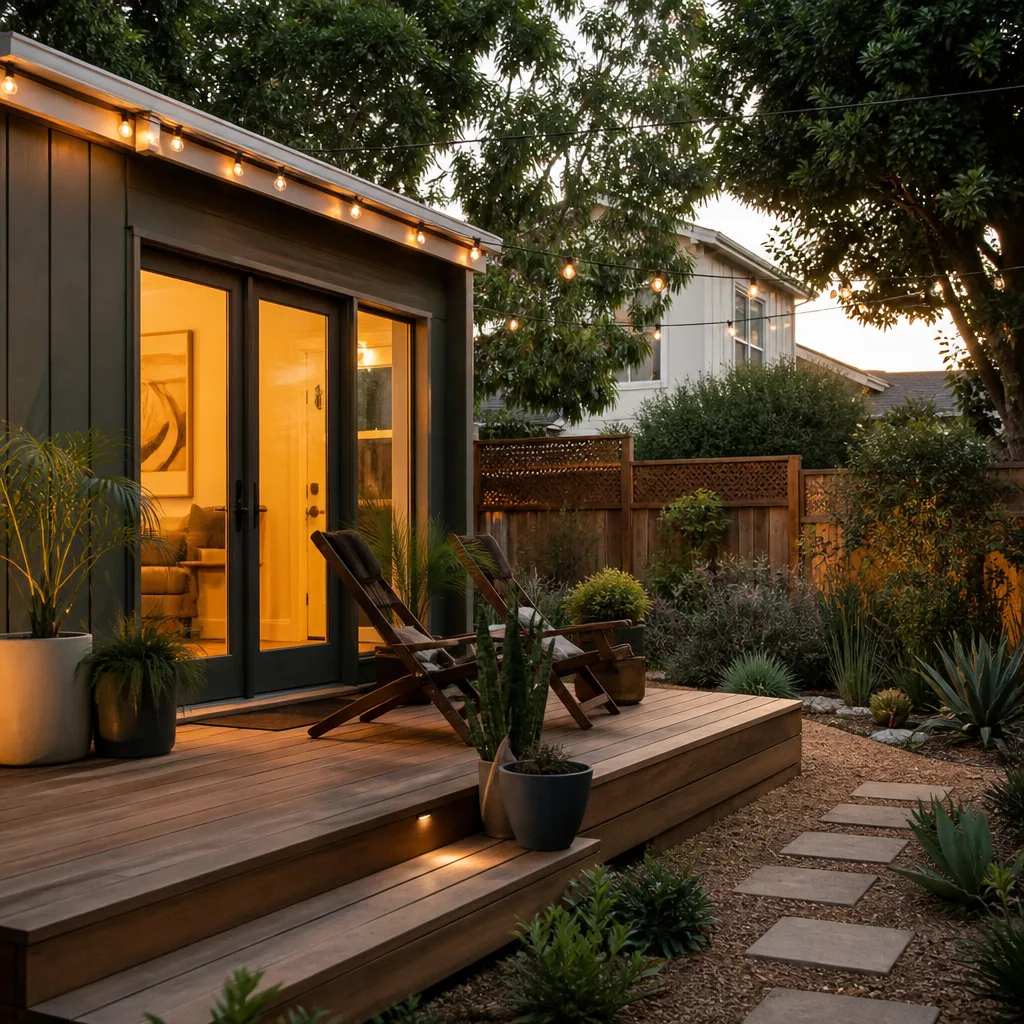
The DIY-vs-professional ADU decision in Ventura is not about whether you are capable. It is about what you are willing to carry. An owner-builder permit puts code compliance, construction defects, inspection failures, and resale disclosure on your personal record. A licensed ADU contractor absorbs those liabilities and provides the documentation that Ventura buyers and lenders expect. You can still save money and build with your own hands by owning the finish scope while a professional handles the structural, electrical, plumbing, and mechanical systems. That split gives you the satisfaction of the work without the exposure of the permit. For more guides & resources, explore our blog. If you want a written price, a clear scope, and a contractor who tells you exactly who is coming to your property before they arrive, call Sutton ADU Ventura at (350) 238-1748. The estimate is free, and the 365-Day Done Right Promise means the work is covered for a full calendar year after completion.
Written by Miles Hartwell, Owner at Sutton ADU Ventura, serving Ventura since 2006.