Last updated October 15, 2026
How to Hire a ADU Contractor in Ventura: A Step-by-Step Guide
California’s Contractors State License Board suspended or revoked more than 40 contractor licenses in Ventura County over the past two years. Most homeowners never hear about that number. They check that a license exists, maybe glance at a Yelp page, and sign a contract with someone they’ve never met. This guide walks you through the full hiring process for an ADU contractor in Ventura, step by step, and you can find more guides & resources on our blog to help you through every phase of your project.
Quick Answer
Hiring an ADU contractor in Ventura comes down to five steps: verify the license is active and in the right classification, confirm the contractor pulls permits regularly in both the city and county of Ventura, get a written itemized fixed price before signing anything, verify every worker’s identity before they arrive, and review the contract line by line for vague scope language. If you do those five things, you’ve eliminated most of the risk. The homeowners who skip the vetting steps are the ones who end up with stalled permits, surprise change orders, and crews they’ve never met showing up unannounced.
Table of Contents
- The Exact CSLB License Classifications for ADU Work (and How to Verify Them in Under 5 Minutes)
- How to Check a Contractor’s Permit History in Ventura City and County
- Why a Written, Itemized Fixed Price Matters More Than a Low Bid
- How to Confirm Every Worker Who Shows Up Is Who the Contractor Says
- The Specific Line Items Every ADU Contract Should Include
- Prefab ADU Brands in Ventura: Choosing Between Abodu, Cover, Dvele, and Custom Construction
- Red Flags That Appear at the Proposal Stage
- Common Mistakes to Avoid
- When to Call a Professional
- Frequently Asked Questions
The Exact CSLB License Classifications for ADU Work (and How to Verify Them in Under 5 Minutes)
Not every contractor license allows someone to build an ADU. In California, a General Building Contractor holds a Class B license, which covers framing, foundation, roofing, and the structural work involved in a detached ADU or a garage conversion. That’s the classification you want for a full build. A Class C license is a specialty license: C-5 for framing, C-9 for drywall, C-36 for plumbing, C-10 for electrical. A contractor holding only specialty licenses cannot legally pull a permit for a complete ADU project, no matter how experienced they are. If someone presents a C-36 plumbing license and offers to manage your entire ADU build, that’s a red flag, and the permit will likely get rejected.
Verifying a license takes under five minutes. Go to the CSLB website, click “Check a License,” and enter the number. You’re looking for three things: the status reads “Active,” the classification is “B – General Building Contractor” (or the contractor has a qualified individual on staff who holds it), and the business name on the license matches the name on the contract. In Ventura County specifically, we’ve seen homeowners accept a license number that checks out as active, only to discover later that the classification was wrong for the scope of work, and the permit office rejected the application outright.
While you’re there, check the license’s issue date. A brand-new license isn’t automatically disqualifying, but if someone claims fifteen years of experience and their license number is two years old, ask why. Also check for any citations or arbitration awards. The CSLB publishes them. A single citation for an unpaid supplier doesn’t mean you should walk away, but three citations within five years tells you something about how the contractor treats vendors and clients.
How to Check a Contractor’s Permit History in Ventura City and County
Permitting in Ventura is not a single process. A detached ADU in the incorporated city of Ventura goes through the City of Ventura’s Building and Safety Division. The same project in an unincorporated area like Oak View or Saticoy goes through Ventura County. The two jurisdictions have different plan check timelines, different ADU ordinance interpretations, and different inspectors. A contractor who pulls permits regularly in Ventura understands ADU Permits, Codes & Inspections in CA: What You Need to Know, including which jurisdiction applies to your address and what each one requires. A contractor who hasn’t worked in the area might not, and you’ll feel it when the plan check drags on for an extra two months.
Ask any contractor you’re considering three specific questions about Ventura permits:
- “How many ADU permits have you pulled in the City of Ventura in the last three years, and can you give me addresses for two of them?” A legitimate contractor answers immediately. Someone fumbling for an answer is telling you something useful.
- “Do you handle the permit process for the City of Ventura or for Ventura County, or do I pull the permit myself?” The owner-builder permit route exists, but it transfers legal liability for the entire project onto you, including worker injury claims. A professional contractor pulls the permit under their own license.
- “Which Ventura permit office will my project go through, and what’s the realistic timeline right now?” The answer should be specific: the City of Ventura’s Community Development Department at 501 Poli Street, or the County’s Building and Safety Division, with a general idea of current turnaround.
You can independently verify a contractor’s permit history by calling the City of Ventura’s Building and Safety Division and asking about the contractor’s recent permit record. Some jurisdictions are more forthcoming than others, but asking is free, and the answer, or the hesitation before the answer, is information.
Why a Written, Itemized Fixed Price Matters More Than a Low Bid
In our experience building ADUs across Ventura, the cheapest bid is rarely the cheapest project, as our ADU Cost Breakdown: The Ventura Homeowner’s Reference for 2026 explains in detail. What we see far more often is a low number offered verbally, then a series of change orders and surprise invoices that push the final cost thousands of dollars past the second-lowest bid. The difference between a fixed price and an estimate is real: an estimate is a guess, and a fixed price is a promise. Under California law, a contractor cannot increase the price beyond a written fixed price without a signed change order, and if they do, you have legal recourse. That protection only exists if the price is written and unambiguous.
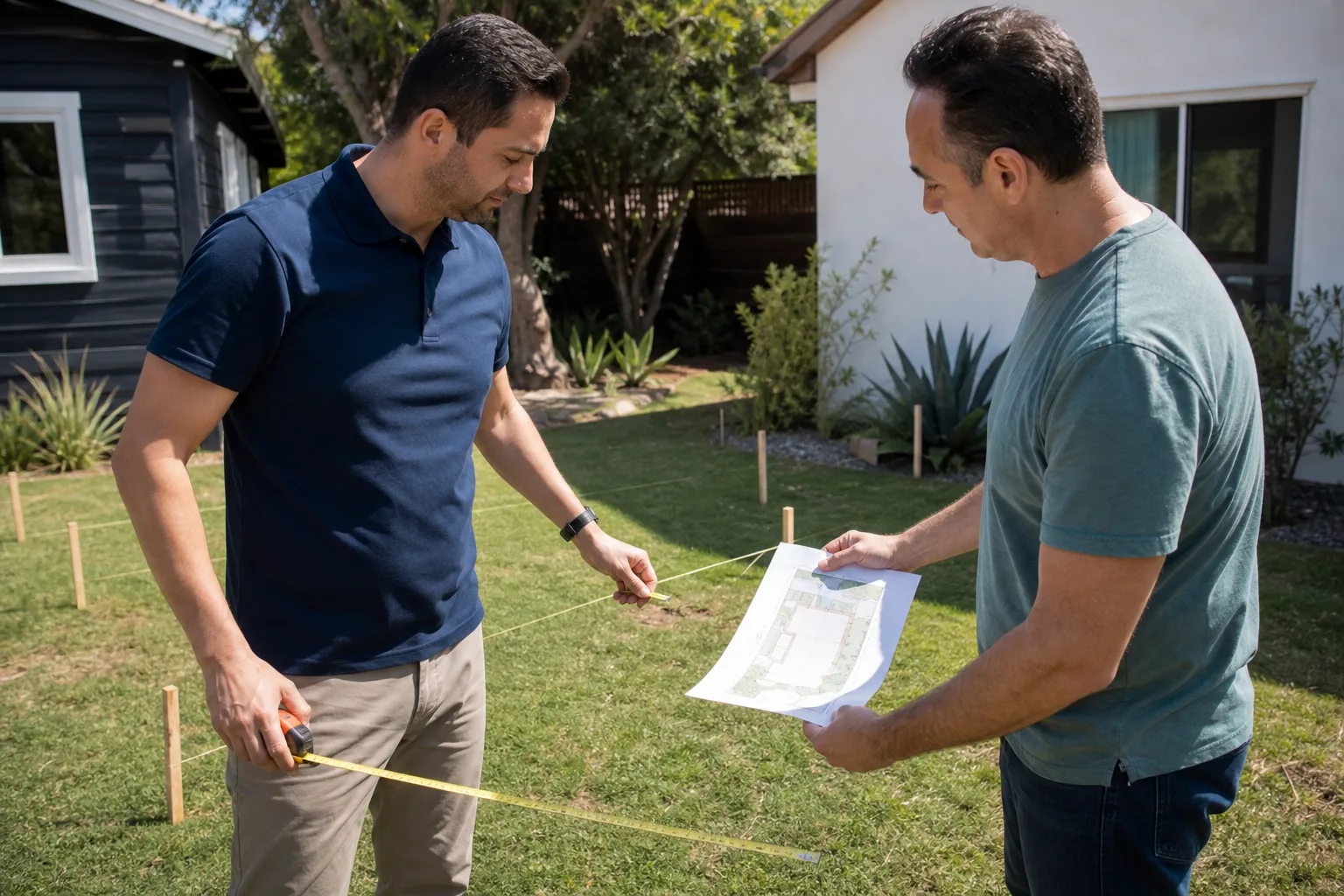
A true line-item fixed price for a Ventura ADU breaks down the cost by category: site preparation and foundation, framing and structural, roofing, windows and exterior cladding, plumbing rough-in and fixtures, electrical rough-in and fixtures, insulation and drywall, interior paint, flooring, and final inspection and punch list. If a proposal says “ADU build: $250,000” with no breakdown, that’s not a fixed price. That’s a guess with a number attached. You should also see the cost of permits listed separately, the cost of utility connections, and any allowance amounts for fixtures or finishes, with the understanding that allowances are the one area where final cost can move.
At Sutton ADU Ventura, every homeowner receives a written price before any work begins. That’s the Threshold Standard, and it’s not a courtesy; it’s the foundation of the contract. You know the total before you sign, and the 365-Day Done Right Promise means that if any element of the work proves defective within a year of completion, we fix it at no cost. A written price and a named guarantee are the two pieces of paper that convert a contractor’s promises into something you can enforce.
How to Confirm Every Worker Who Shows Up Is Who the Contractor Says
Most homeowners never ask this question, and it might be the most important one in the entire hiring process. You will sign a contract with a company name, but the people who actually walk onto your property, unlock your gate, and work inside your home are individual human beings. If you haven’t verified who they are before they arrive, you’ve placed a significant amount of trust in a name you’ve never seen.
Ask every contractor you’re considering this question directly: “Who will be on my property each day, and can you send me their names and photos before they arrive?” The answer tells you everything. A contractor with a structured verification process answers immediately and describes the system. A contractor who says “it’s whoever’s available that week” has just told you they don’t know who will be on your property, which means you won’t either.
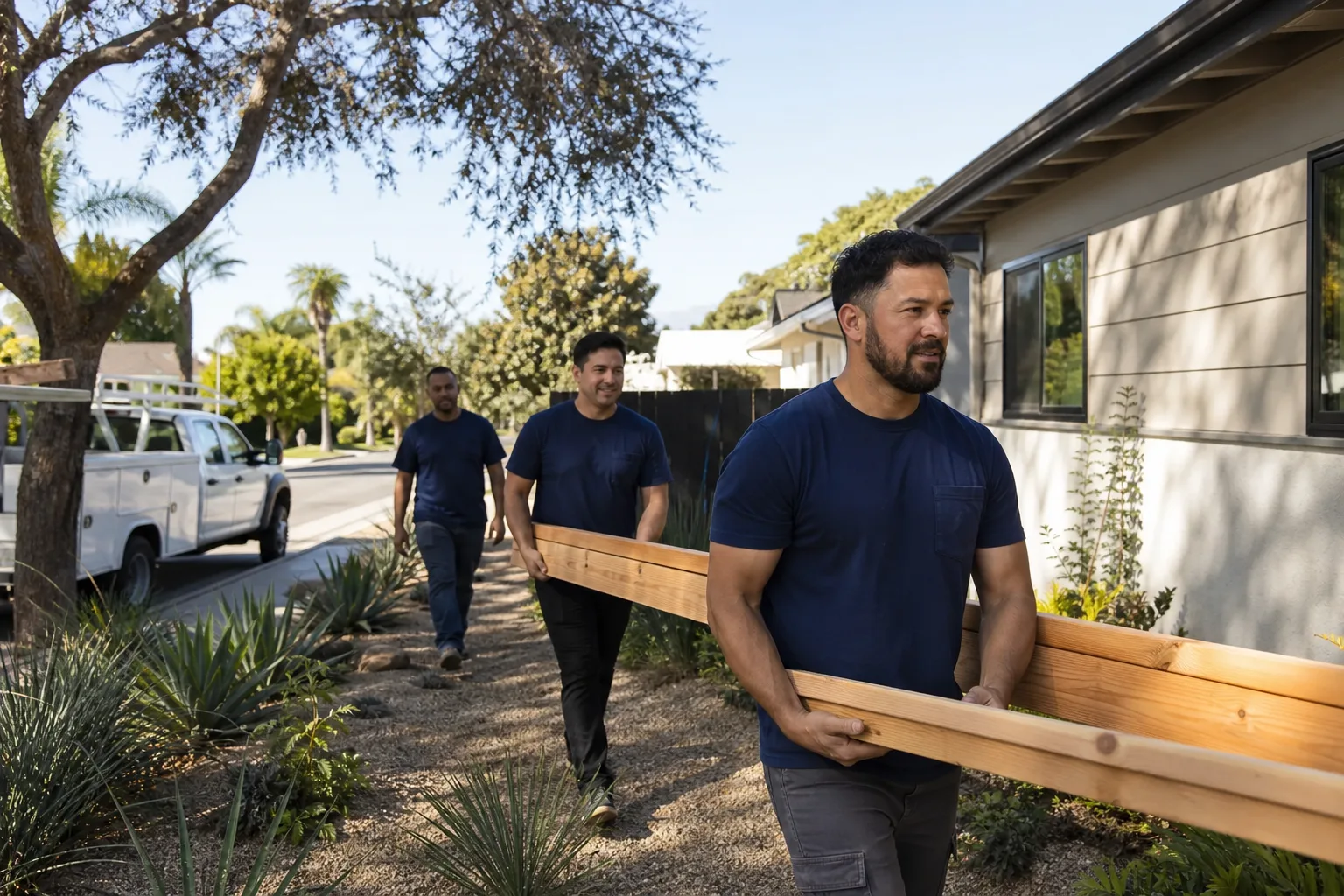
The Threshold Verified standard is built around this exact concern. Every field technician at Sutton ADU Ventura is background-checked and identity-verified before they ever set foot on a client’s property in Ventura. The homeowner receives the technician’s name and photo before arrival. The technician shows up in a clean, marked uniform and presents a photo ID badge at the door, every time. Subcontractors are held to the same standard. You don’t have to wonder who’s coming; you know before they knock.
Also ask how subcontractors are vetted. A general contractor on an ADU project typically brings in electrical, plumbing, and roofing subs. Each one of those workers will have access to your property. If the GC can’t tell you who the electrical sub is and whether that sub’s workers are background-checked, that’s a hole in the verification process, and it’s a hole that a homeowner in East Ventura or Midtown should not accept.
The Specific Line Items Every ADU Contract Should Include
Vague contract language is the number one source of disputes in residential construction. The disputes don’t start when work begins. They start the moment a contract says “per plan” or “as needed” or “standard installation” and leaves the rest to interpretation. Here are the line items every ADU contract should include, written explicitly, in your contract before you sign anything:
- Full legal description of the work. The contract should describe the specific structure: detached ADU, garage conversion, or addition, with square footage, number of rooms, and structural scope.
- Project plans and specifications. The contract should reference specific plan sheets and specifications documents, with the understanding that the signed plans, not the sales conversation, govern the work.
- Total fixed price and payment schedule. The price in writing, with a payment schedule tied to work milestones, not calendar dates. California law caps the down payment at 10% of the total or $1,000, whichever is less.
- Start date and substantial completion date. A realistic timeline for a Ventura ADU runs four to eight months depending on scope, design review, and permit timelines. A contractor promising a detached ADU in thirty days is not being straight with you.
- Change order procedure. Written change orders, signed by both parties, before any additional work begins. Any contractor who says “we’ll just handle it and bill it at the end” has told you how the relationship will end.
- Permit responsibility. The contract should state that the contractor obtains all required permits from the City of Ventura or Ventura County, that the work will be inspected at required intervals, and that final inspection will be scheduled upon completion.
- Insurance certificates. General liability and workers’ compensation certificates with the homeowner named as additionally insured, current and valid for the entire construction period.
- Warranty terms in writing. A named, written guarantee with a specific duration. At Sutton ADU Ventura, the 365-Day Done Right Promise covers defects in workmanship for one full calendar year from project completion. If the work isn’t right, we make it right.
- Cleanup and site protection. Daily cleanup, protection of existing landscaping where feasible, and a final debris removal provision.
- Lien release provisions. The contract should state that the contractor will provide conditional and unconditional lien releases with each payment, protecting you from mechanic’s liens filed by unpaid subcontractors or suppliers.
If any of these line items are missing, and the contractor resists adding them, that resistance is your answer. A contractor who won’t put the promise in writing won’t honor the promise in practice.
Prefab ADU Brands in Ventura: Choosing Between Abodu, Cover, Dvele, and Custom Construction
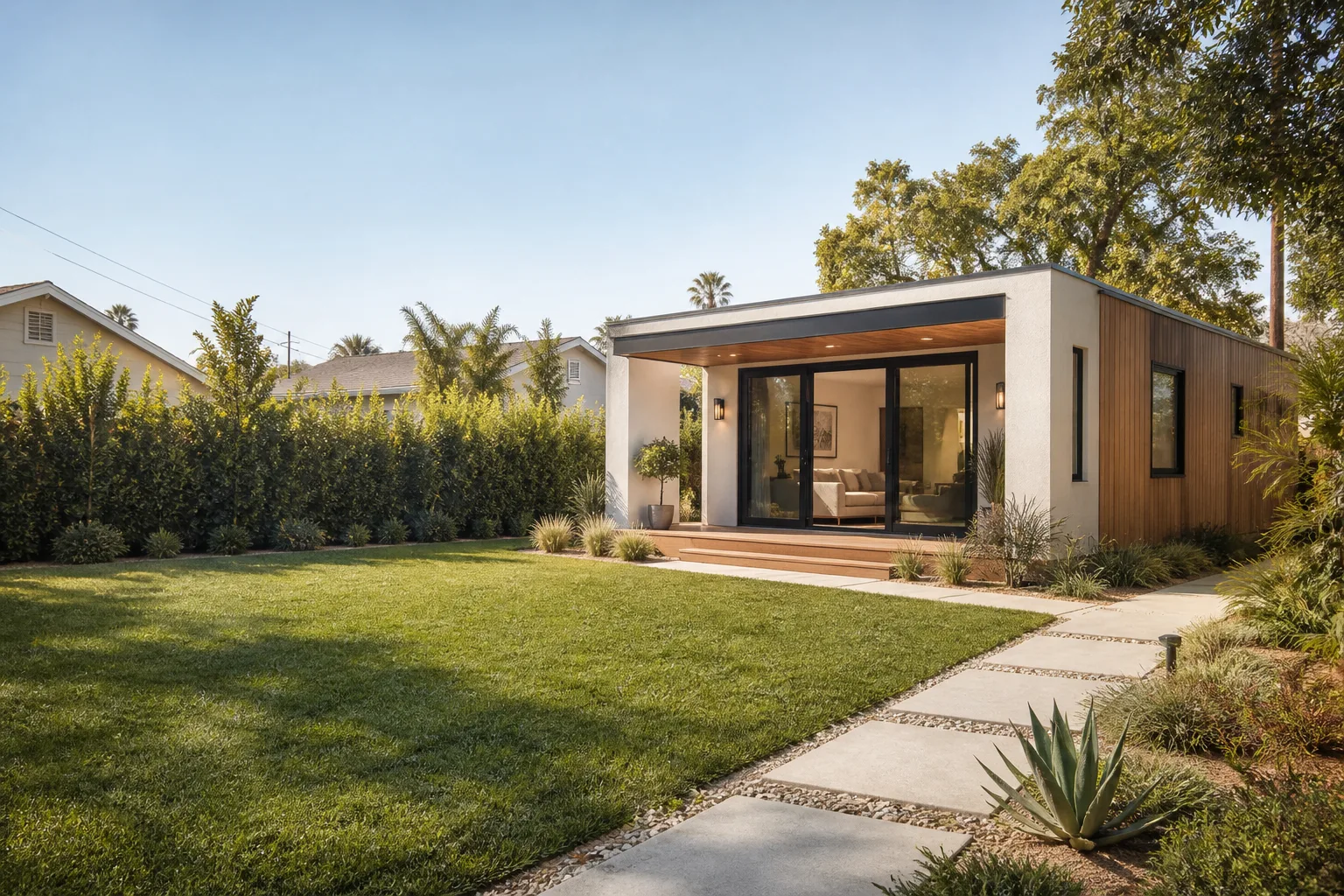
Ventura homeowners considering an ADU have a real decision to make between prefab modular units and stick-built custom construction, and the right answer depends on your lot, your timeline, and your budget. Prefab brands have matured significantly, and several have product lines specifically designed for California’s ADU market. Abodu focuses on compact, quick-to-permit detached units with a clean, modern aesthetic. Cover builds precision-engineered panelized systems with an emphasis on design consistency and dimensional accuracy. Dvele pushes toward high-performance, healthy-home construction with advanced materials and air-quality standards. Each has a different sweet spot, and an informed contractor helps you understand which one fits your specific Ventura lot, which is often the constraint that drives the decision.
The practical question is site work. A prefab unit still requires a foundation, utility connections, and final finishing, all of which require permits from the City of Ventura or Ventura County, depending on the address. Some homeowners assume a prefab ADU means no contractor, no site work, and no coordination. That assumption usually falls apart the first time the unit needs a sewer connection trenched across a sloped Ventura lot. A contractor who has worked with these product lines understands the integration points and handles the site work and the finish work so the prefab unit arrives and gets set correctly.
Having worked with Abodu, Cover, and Dvele product lines, we can tell you honestly which one fits your project and which ones don’t. Sometimes the answer is none of them, and a stick-built custom ADU makes more sense because the lot shape, the setback requirements, or the homeowner’s specific layout needs don’t match a standard module. The point is to get an honest answer, not a sales pitch for whichever brand pays the highest margin. When you’re interviewing contractors, ask which specific prefab brands they’ve actually installed, and ask to see photos or addresses of completed prefab ADUs in Ventura. You should also read our page on ADU Builders in Ventura for a fuller look at how we approach the prefab-versus-custom decision.
Red Flags That Appear at the Proposal Stage, Not Just After Work Starts
By the time a project goes wrong, the warning signs were usually visible months earlier, at the proposal stage. Most homeowners miss them because they’re not looking. Here are the specific red flags to watch for during the bidding and proposal process:
- Vague scope language. Phrases like “complete ADU per plan” or “all work to standard” or “as required by code” are placeholders, not commitments. If the scope can’t be pinned down in plain language before you sign, it won’t get any clearer after.
- Cash deposit demands above 10%. California law limits contractor down payments to 10% of the total contract price or $1,000, whichever is less. Any contractor asking for more, or asking for cash specifically to avoid a paper trail, is breaking the law before the project starts.
- Missing or stale insurance certificates. Request current certificates of general liability and workers’ compensation insurance directly from the contractor’s agent. If the certificate is expired, or if the contractor hesitates to provide it, you’re looking at someone who is not insured right now.
- Pressure to sign without plans. No legitimate contractor expects you to sign a contract without plans and specifications. If someone says “sign now so we can lock in pricing, we’ll figure out the details later,” decline.
- A bid far below the others. When three bids for a comparable Ventura ADU come in at $280,000, $310,000, and $195,000, the lowest bid is almost never a bargain; it’s a bidder who left things out, intends to make it up in change orders, or plans to cut corners you won’t see until the walls are closed.
- Hesitation on worker identity. The moment a contractor balks at sending names and photos before arrival, or says “we’ll tell you who’s coming each morning,” the verification promise is already broken.
None of these red flags requires a construction background to spot. They’re visible in the paperwork before any work starts, which is exactly when you want to spot them.
Common Mistakes to Avoid
- Checking only that a license exists, not whether it’s valid and correctly classified. An active license in the wrong classification, like a specialty plumbing license for a full ADU build, will stall your permit application. Check status, classification, and issue date on the CSLB database.
- Hiring based on the lowest bid. A heavily discounted Ventura ADU bid usually means the contractor omitted site work, underestimated the foundation, or plans to make up the difference in change orders. Compare bids line by line, not headline to headline.
- Signing a contract without a written, itemized price. A verbal estimate offers you no protection under California law when the invoice arrives higher than the handshake number. Fixed price in writing, every time.
- Skipping the worker identity conversation entirely. If you don’t know who’s coming to your Ventura property before they arrive, you’ve outsourced your home’s security to whoever answers the contractor’s phone. Ask for names and photos before day one.
- Pulling the permit as an owner-builder to save money. The owner-builder route transfers all construction liability and worker injury risk onto you personally. A reputable contractor pulls the permit under their own license and carries the liability that comes with it.
- Accepting a verbal warranty. A guarantee that isn’t written into the contract is a goodbye wave dressed up as reassurance. The warranty should be named, time-bound, and in the contract language.
- Overlooking Ventura-specific coastal and fire zone requirements. Parts of Ventura fall into Wildland-Urban Interface zones with specific exterior construction and defensible space requirements that affect material choices and cost. A contractor unfamiliar with these zones will under-bid the project and then “discover” the added cost mid-build.
When to Call a Professional
If you’re considering an ADU in Ventura and any part of this guide felt unfamiliar, call a professional before you sign anything. Specifically, call when you’ve received a bid you can’t fully parse, when a contractor resists the verification steps, when the permit conversation turns vague, or when you simply want a written price and a clearly defined process before committing. Sutton ADU Ventura offers free estimates in Ventura, and every estimate comes with a written, itemized price before any work begins. Call (350) 238-1748 to schedule yours. If you’re also weighing a larger project alongside an ADU, take a look at our Home Addition Contractor in Ventura page to see how the scope and pricing compare.
Frequently Asked Questions
Most detached ADUs in Ventura run $180,000 to $320,000 before site work, depending on square footage, foundation conditions, and finish level. Garage conversions typically run $90,000 to $160,000 because the structure, roof, and foundation already exist. Site work, utility connections, and permits add cost on top of the base build. Call (350) 238-1748 for an exact quote on your specific lot and scope; estimates are free.
Go to the CSLB website and run the license number through the “Check a License” tool. You’re looking for an active status, a “B – General Building Contractor” classification, a business name that matches the contract, and no unresolved citations or arbitration awards. The whole check takes under five minutes, and in Ventura County, where license suspensions happen more often than most homeowners realize, it’s worth doing before you sign anything.
A detached ADU is a new, separate structure built from the ground up, requiring foundation work, all-new framing, roofing, and utilities, while a garage conversion transforms an existing attached or detached garage into living space. Garage conversions are generally faster and less expensive in Ventura because the shell already exists, but they require compliance with habitable space standards for insulation, ventilation, and emergency egress. Both require permits from the City of Ventura or Ventura County depending on the address.
A realistic timeline for a Ventura ADU runs four to eight months, including design, permitting, and construction. The City of Ventura and Ventura County have different plan check timelines, and both can stretch when the permitting queue is full. Prefab units from brands like Abodu or Dvele can shorten the construction phase, but site work and permitting still apply. Any contractor promising a complete detached ADU in thirty days is not giving you an honest number.
Prefab ADU companies like Abodu, Cover, and Dvele manufacture the unit, but a licensed general contractor still handles the site work, foundation, utility connections, and finishing in Ventura. Some prefab brands have in-house installation teams, but most rely on local contractors for the site-specific work. The right approach is a contractor who understands both the prefab product line and the Ventura permitting landscape, so you’re not coordinating between a factory and a foundation crew yourself.
A contractor cannot raise the price beyond the written fixed price without a signed change order, but that protection only exists if the contract includes a written, itemized fixed price in the first place. If the contract says “estimate” and the scope says “per plan,” the price can move legally. The protection is the fixed price in writing, and the change order procedure that requires your signature before any added work begins. Call (350) 238-1748 for a written quote that locks the price before work starts.
Ask for names and photos of every worker before they arrive, and ask whether background checks and identity verification are part of the company’s standard process. At Sutton ADU Ventura, the Threshold Verified standard means every technician is background-checked, identity-verified, uniformed, and photo-badged, and their name and photo are sent to you before arrival. Subcontractors are held to the same standard. If a contractor can’t tell you who’s coming before they show up, that’s the answer.
The Bottom Line
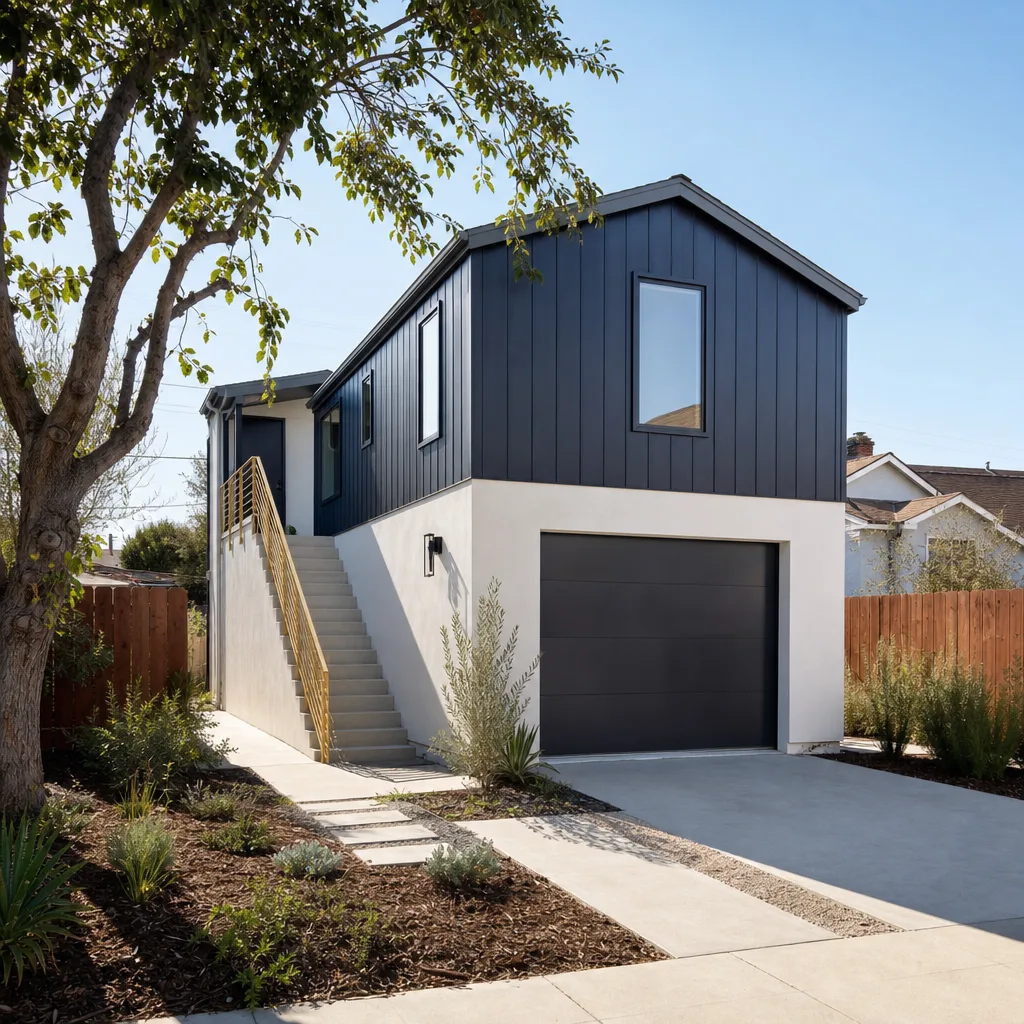
Hiring an ADU contractor in Ventura is a verification process, not a price comparison. Check the license classification and status on the CSLB database. Confirm the contractor’s permit history with the City of Ventura or Ventura County. Get a written, itemized fixed price with the specific line items this guide outlines. Ask for names and photos of every worker before they arrive. Read the contract for vague scope language, and walk away from cash deposit demands above 10% and verbal warranties. Do those things in order, and you’ll have a contractor you can trust, a price you can enforce, and a crew you can identify. Skip them, and you’re gambling with your home and your money. For more on how Sutton ADU Ventura approaches ADU construction specifically, visit our ADU Builders in Ventura page, or if a room addition is part of your plan, see Room Addition Contractor in Ventura. And if you want to start with the source of everything we do, start at our Sutton ADU Ventura home page.
Written by Miles Hartwell, Owner at Sutton ADU Ventura, serving Ventura since 2006.