James Hardie Junior ADU Conversion: The Ventura Owner’s Guide
If you’re researching a junior ADU conversion on a home with James Hardie siding, you’re likely asking what it costs, how the exterior work fits into the build, and whether your existing cladding survives the process. In Ventura, a junior ADU conversion typically runs $120,000 to $190,000 when the structure already exists (a garage, a large bedroom wing, a workshop), with the James Hardie exterior work accounting for roughly $8,000 to $18,000 of that depending on how much siding gets matched, patched, or replaced. Most owners discover the siding question midway through planning, when they realize a junior ADU needs its own entrance, its own windows, and sometimes a new wall section, and suddenly the James Hardie product they’ve trusted for years has to integrate with the new work seamlessly.
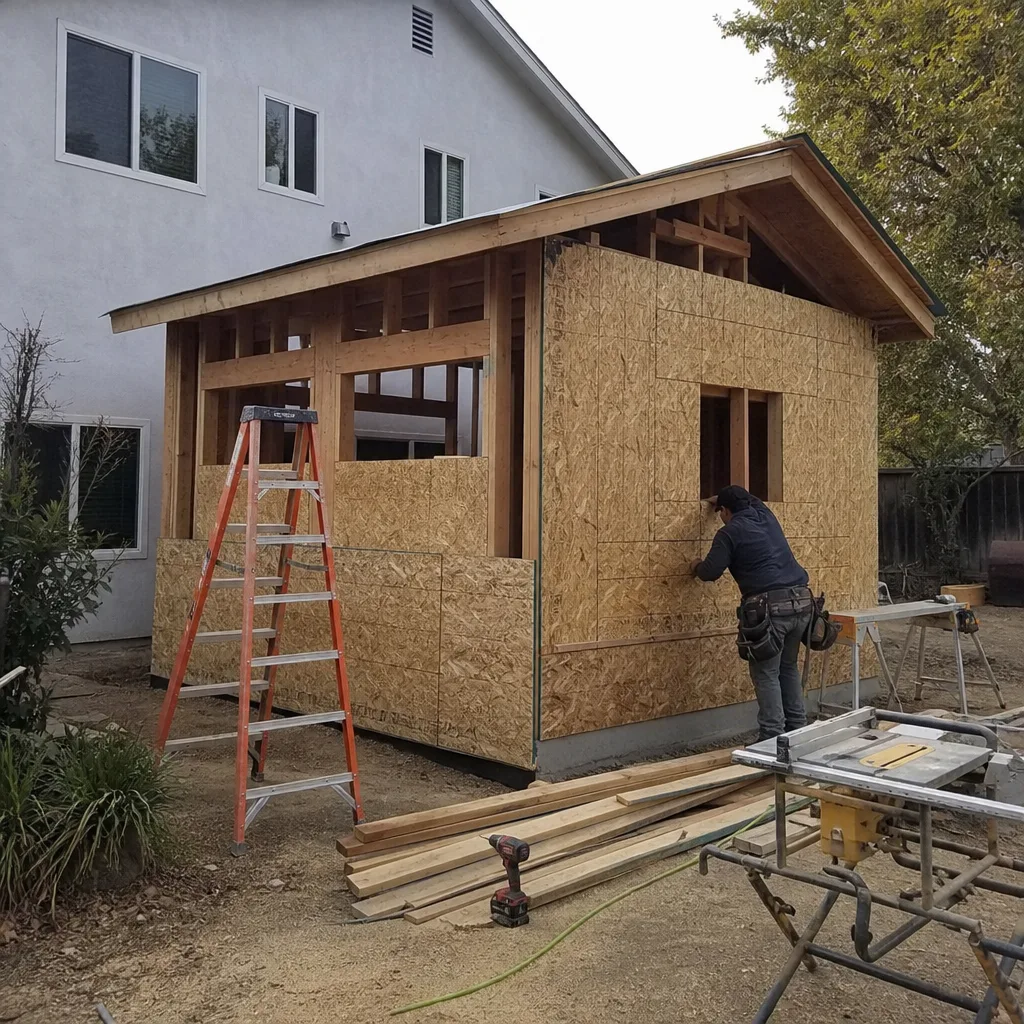
The good news: James Hardie siding is one of the more forgiving exterior products to work with on a conversion because it’s fiber cement, not vinyl or wood. It cuts cleanly, holds paint predictably, and can be matched by color and texture if you know the original product line. The bad news: a lot of Ventura homes have discontinued Hardie colors or plank widths, and a mismatched patch looks like exactly what it is. We see this every week on conversions from the Westside to Midtown. The siding isn’t usually the reason a junior ADU stalls, but it’s often the reason a finished project doesn’t look finished. Miles Hartwell has walked enough of these sites in Ventura to tell homeowners the same thing at the start: get the Hardie details pinned down before the drywall goes up, not after.
Key Takeaways:
- Junior ADU conversions in Ventura typically cost $120,000 – $190,000 total, with James Hardie exterior work at $8,000 – $18,000 depending on scope.
- James Hardie siding can be color-matched and texture-matched, but discontinued lines create real gaps in the final look.
- Sutton ADU Ventura stocks common Hardie plank profiles and works with your existing siding or full replacement, with a written price before any work begins.
- Every technician sent to your property is background-checked, identity-verified, and photo-badged under the Threshold Standard.
Which James Hardie Models This Applies To
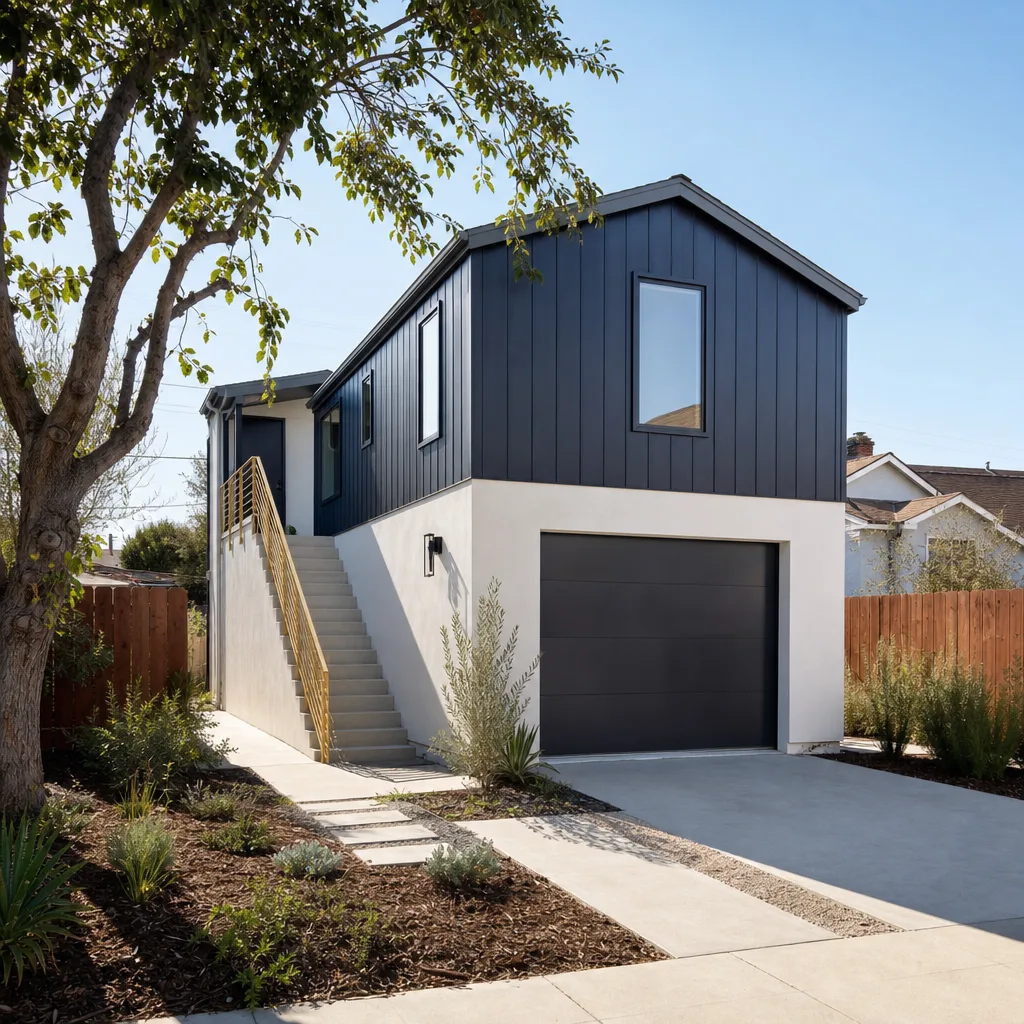
The short answer: most of them. If your home was built or re-sided in Ventura after about 1990, you probably have one of three Hardie product lines: HardiePlank lap siding (the most common, in 5.25-inch, 6.25-inch, 7.25-inch, or 8.25-inch exposure), HardiePanel vertical siding (popular on 1960s ranch styles and garage conversions), or HardieShingle (cedar-look panels used on gables and accent walls in Victoria Avenue and College Area neighborhoods). A junior ADU conversion typically means adding a separate entrance, re-framing a portion of a wall, cutting new window openings, and possibly extending a roof line, so the siding question isn’t “do we touch it” but “how much do we remove and can we match it.”
One thing most homeowners don’t know until they’re in it: James Hardie changed product formulations over the years, and a plank from 2008 is not always identical to a plank from 2022 in thickness, edge profile, or factory finish. If your original siding is the older 7/16-inch thick board and today’s equivalent is slightly thicker, a butt joint won’t sit flush. That’s an easy thing for us to spot during the estimating visit, and it’s exactly the kind of compatibility gotcha that turns a clean conversion into a visible patch job if nobody checks first. For OEM versus aftermarket on James Hardie specifically: Hardie is the OEM of its own fiber cement, and we don’t recommend off-brand fiber cement substitutes from big-box stores for anything structural or highly visible. Paint and caulk are different matters, where quality third-party options from Sherwin-Williams and OSI hold up better in Ventura’s salt air and sun than some factory finishes.
We also work regularly with homeowners who have Abodu, Cover, or Dvele prefab units on their property, and those conversations often involve James Hardie as well, since several prefab companies spec Hardie panels as their standard exterior. If you have a prefab ADU and you’re adding a junior unit or converting a garage alongside it, we can match the cladding logic across both structures so the lot doesn’t look like two different projects landed next to each other.
Signs Your James Hardie Junior ADU Conversion Is Failing
Siding failure on a Ventura conversion usually shows up in specific ways, and most of them trace back to installation details rather than the Hardie product itself. Here’s what we see in the field:
- Swelling or crumbling board edges near the ground. This is almost always a clearance issue. James Hardie specifies a minimum 6-inch gap between siding and grade in most applications. When a garage slab sits low or a conversion raises the siding line, boards that touch soil wick moisture and fail from the bottom edge upward. We see this routinely on older Ventura garages where the original slab wasn’t graded well.
- Paint peeling in a repeating vertical line at siding joints. Water is getting behind the boards at butt joints, usually because the original installer didn’t use proper joint flashing or caulked the joint instead of using Hardie’s recommended gap-and-flashing detail. In Ventura’s wet winters, this shows up within two or three seasons.
- Visible gaps opening at outside corners around the new entrance. When a junior ADU door gets cut into an existing wall, the corner conditions change. If the corner trim wasn’t re-fitted to the new framing or caulk joints weren’t tooled properly, the siding starts moving independently. It looks like a cosmetic problem, but it’s letting water into the wall cavity.
- Cracks radiating from window corners you added during the conversion. Fiber cement handles movement differently than wood. If the new window header wasn’t tied into the existing framing correctly, stress concentrates at the corners and the Hardie board cracks instead of flexing. This is a structural symptom wearing a siding costume.
- Faded or chalky finish concentrated on the south and west faces. Ventura sun is honest about what paint fails first. Hardie’s factory finish on those exposures typically lasts 10 to 15 years before needing repaint. If yours is uniformly faded at 7 years, the original finish may have been a third-party paint applied too thin over Hardie’s primer.
Replacement Cost & What’s Included
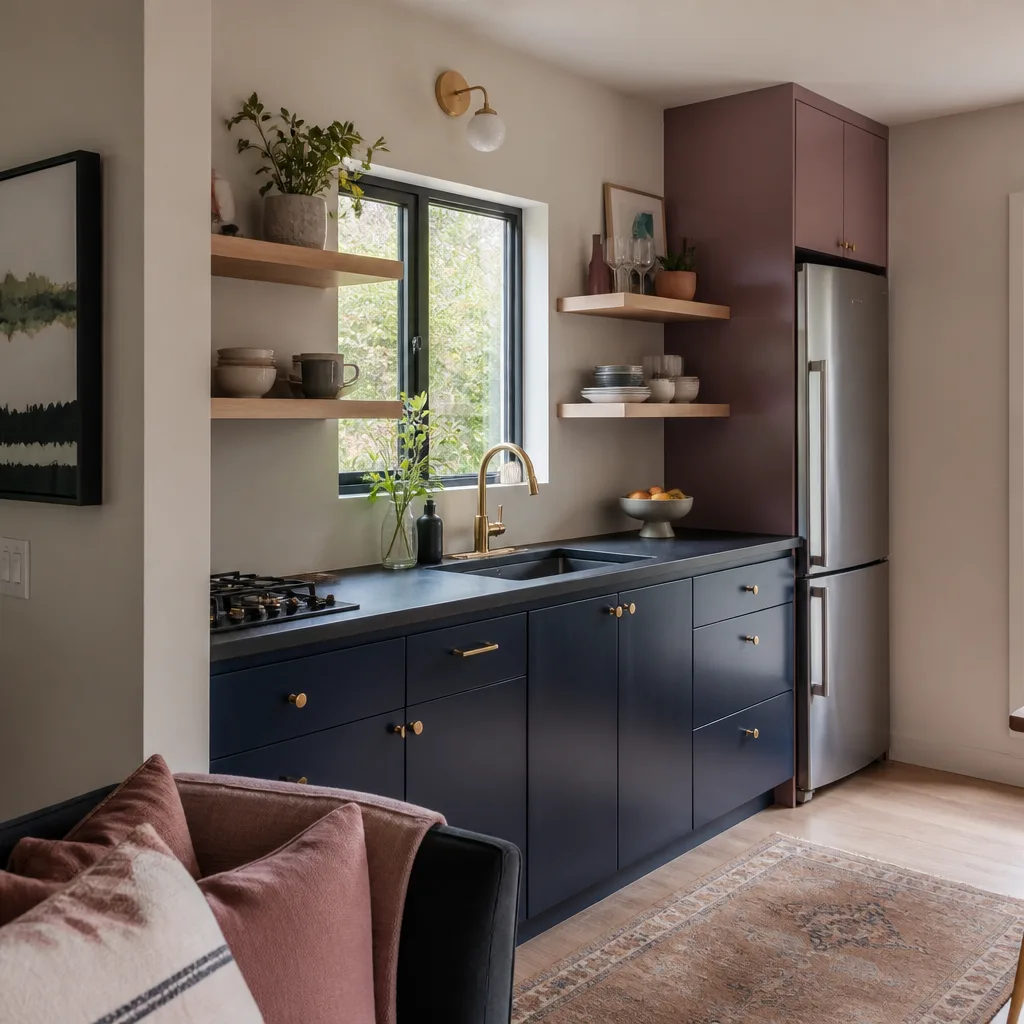
For James Hardie siding work tied to a junior ADU conversion in Ventura, plan on $8,000 to $18,000 for exterior scope on a typical garage or wing conversion. That covers removing and replacing damaged plank runs, cutting in new window and door openings with proper flashing, re-trimming all openings, caulking and sealing to Hardie’s installation specs, and priming and painting to match your existing color as closely as the current product allows. If your conversion requires full exterior re-siding because the original product is discontinued or too damaged to patch, that number moves to $18,000 to $35,000 depending on square footage and whether you’re re-siding all four elevations or just the conversion area.
What drives the range: the amount of existing siding we can save, whether the underlying framing needs repair once we open the wall, the height and access to the work areas, and paint-matching complexity. A straight lap siding match in a current Hardie color is the low end. A 2005-era custom color that has to be matched with a custom mix, plus replacing rotted sheathing behind it, lands on the higher end. Every Sutton ADU Ventura quote includes written line-item pricing before any work starts, and our 365-Day Done Right Promise covers defects in workmanship for one full calendar year from project completion. If something isn’t right within that year, we make it right, no haggling.
DIY or Call Us?
Here’s an honest split. You can safely inspect your own siding: look for boards touching soil, check outside corners for opened caulk joints, note any cracks at window corners. Taking photos helps when you call us. What you shouldn’t attempt on your own is removing or installing fiber cement boards, especially around openings you just cut for a junior ADU. James Hardie board is heavy, it produces silica dust when cut, and proper installation requires specific flashing details, fastener patterns, and joint clearances. Getting a board wrong at a window or door means water enters the wall, and by the time you see the damage inside, the framing repair costs more than the siding job would have. The same caution applies to any electrical work tied to the conversion. This is where a photo-badged, background-checked technician from Sutton ADU Ventura is the cheaper option in the long run. Call (350) 238-1748 and we’ll take a look.
FAQs
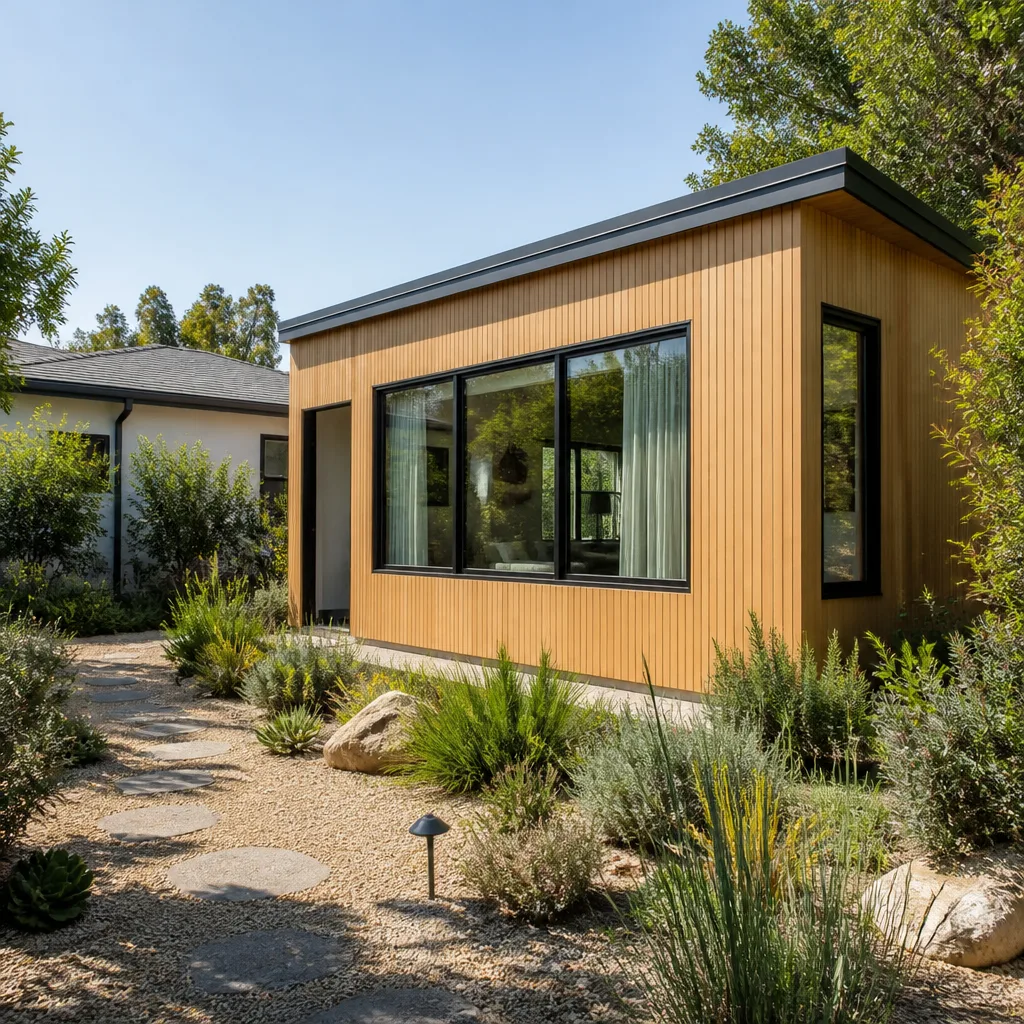
In Ventura’s climate, properly installed and painted James Hardie siding typically lasts 30 to 50 years as a functional exterior product, with repainting needed every 10 to 15 years on south and west exposures. The failure points are almost always installation details, not the board itself. If your siding is failing before the 20-year mark, something was done wrong at the joint, the flashing, or the clearance. Call (350) 238-1748 and we can tell you what you’re actually looking at.
Small cracks and minor edge damage can sometimes be repaired with a fiber cement patching compound and repaint, but any crack that runs through the full board thickness, any swelling at edges, and any board with visible delamination should be replaced. Patching a board that’s taking on water is a temporary cosmetic fix. For an exact assessment of your Ventura conversion, call (350) 238-1748. Estimates are free.
For a typical garage or wing conversion, the James Hardie exterior work takes 3 to 7 working days depending on scope of replacement, number of openings, and weather. Full re-siding takes longer, usually 2 to 3 weeks including paint. We give you a written schedule with your written price so you know what’s happening and when. Call (350) 238-1748 for a timeline specific to your project.
We stock common HardiePlank profiles, corner trims, and flashing materials, and we order project-specific items like HardiePanel or Shingle panels as needed. You won’t be asked to source anything yourself. If we’re matching an existing product, we’ll verify the plank width, texture, and color on site before ordering so the new material actually matches. Call (350) 238-1748 and we’ll schedule a time to look at your property.
Written by Miles Hartwell, Owner, Sutton ADU Ventura at Sutton ADU Ventura, serving Ventura and nearby areas.